
No-Yeast Kefir Pizza Dough: Soft, Chewy Crust with No Rising Time
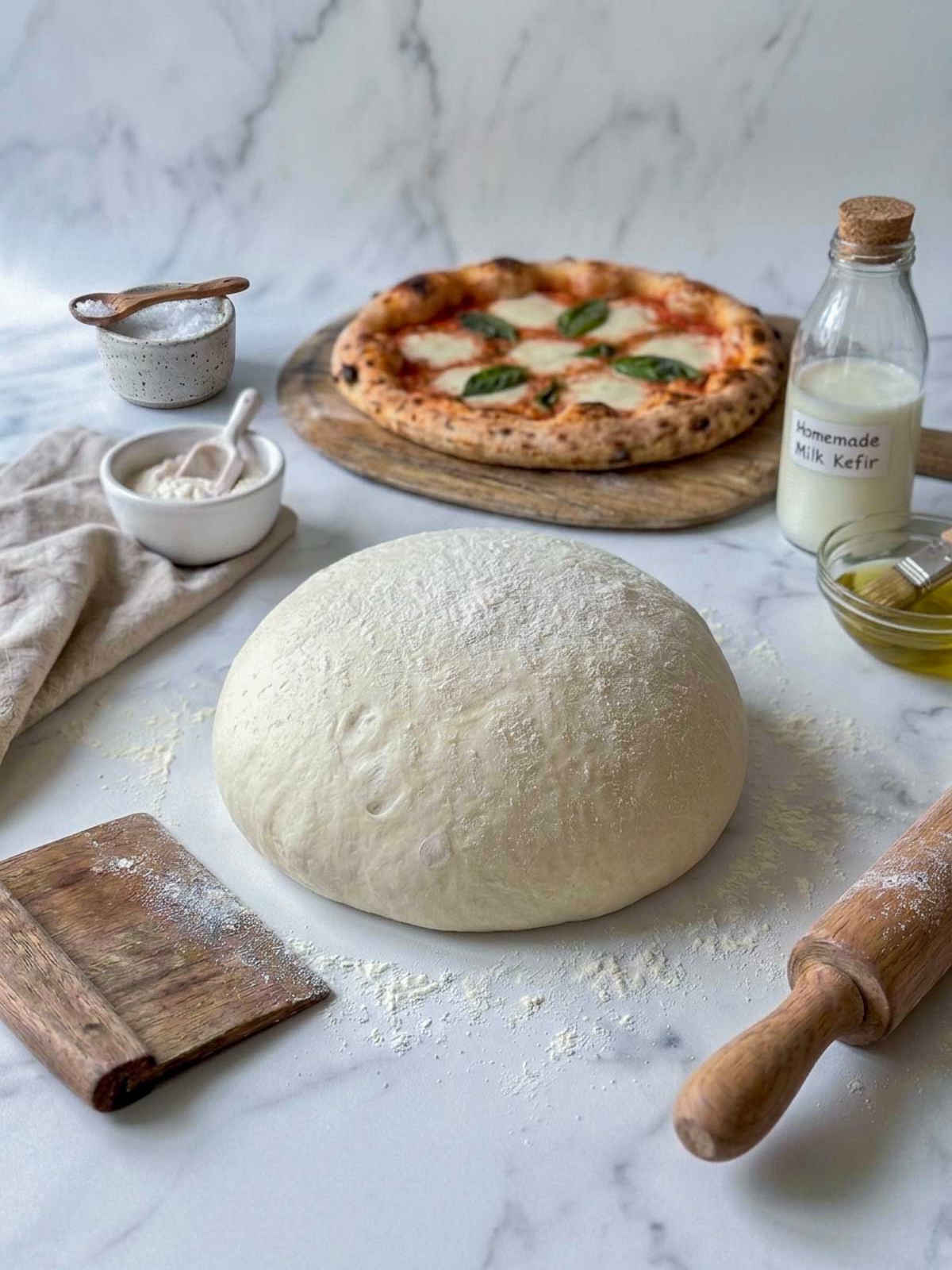
Kefir pizza dough is the fastest route I know to real pizza night. Milk kefir and baking powder do the job yeast normally does, so there is no proofing, no waiting for dough to double, and no planning ahead. You mix five pantry ingredients with milk kefir, rest the dough for 30 minutes while the oven heats, and bake a soft, chewy no-yeast pizza dough with a tang that tastes surprisingly close to sourdough. Two medium pizzas, start to finish, in under an hour.
Disclosure: This post may contain affiliate links. This means I get a small commission if you decide to make a purchase through my links at no extra cost to you.
Jump to:
If you keep a jar of kefir fermenting on your counter, this recipe belongs in your weekly rotation. It is one of my favorite milk kefir recipes for using up the extra bottle that always seems to accumulate by Thursday.
Why You Will Love This Recipe
- No yeast, no rise. Baking powder plus acidic kefir gives the crust its lift, so there is no proofing window to schedule around.
- Sourdough flavor without a starter. Fermented kefir brings the same gentle tang you get from a starter you fed for a week.
- One bowl, five ingredients. Flour, kefir, olive oil, leavening, salt. Nothing to buy specially except the kefir, and you can make that yourself.
- Kid-project friendly. The dough is soft, forgiving, and hard to overwork, so little hands can help stretch it.
- Uses up extra kefir. One cup per batch makes a real dent in an overproducing jar.
Key Ingredients
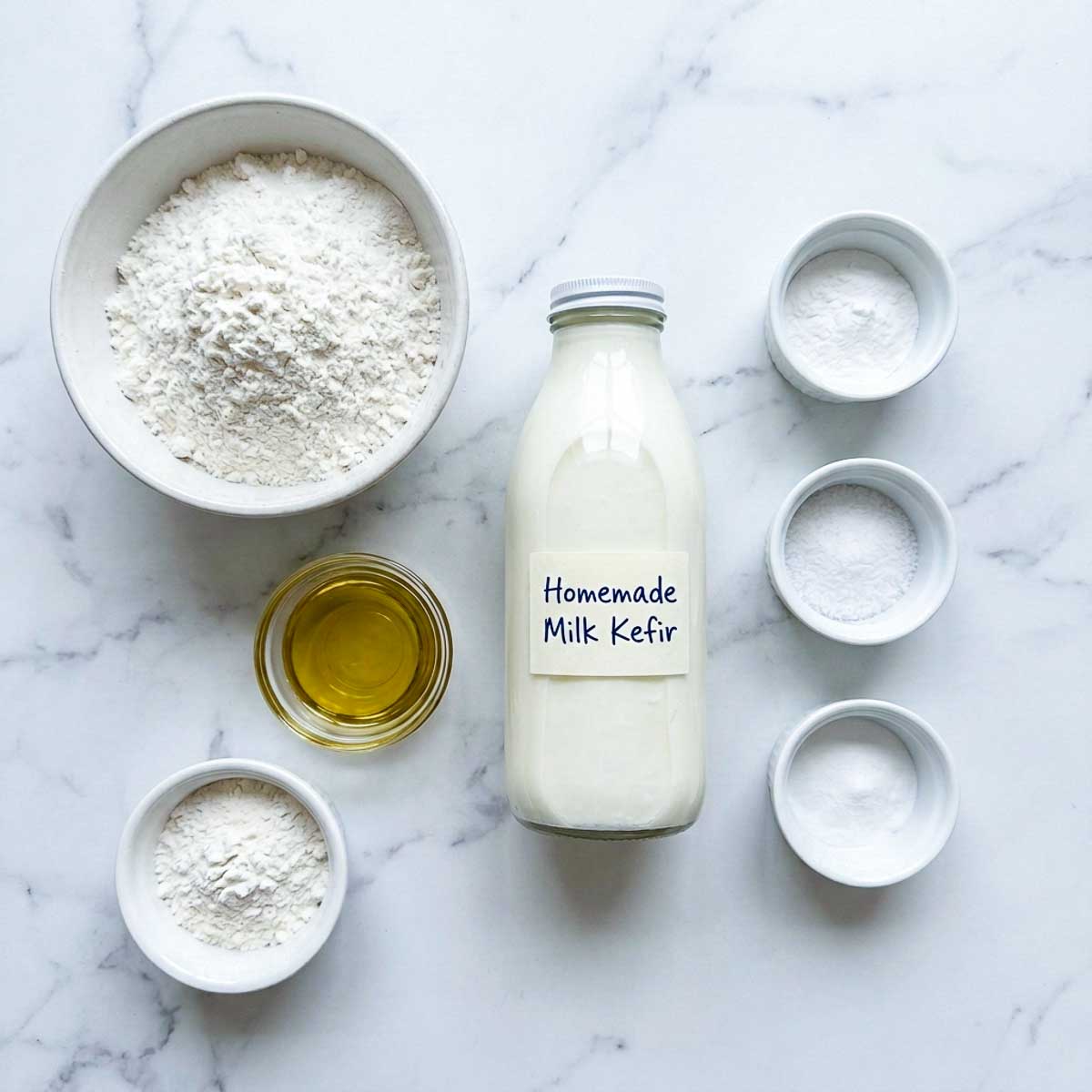
- Milk kefir: Use plain, unsweetened milk kefir at room temperature. Homemade kefir works beautifully here, and in my testing, freshly fermented kefir gave the most consistent results. Its acidity is what reacts with the baking soda and flavors the crust. Store-bought plain kefir works too. If you are new to fermenting, my guide to how to make milk kefir at home walks through the whole process.
- All-purpose flour: No bread flour needed. The kefir's acidity relaxes the gluten, which is what keeps this crust tender rather than tough even without a long fermentation.
- Baking powder and baking soda: The baking powder provides the main lift. The baking soda is there specifically to react with the kefir's acid, which gives extra rise and mellows the tang just enough. This is the same acid-plus-soda logic behind my buttermilk drop biscuits.
See the recipe card for the complete list of ingredients and quantities.
How to Make Kefir Pizza Dough Without Yeast
Before you start, heat the oven to 475°F with a pizza stone, pizza steel, pizza pan, or an inverted baking sheet inside. A fully preheated surface is what gives this crust its lift and browned bottom.
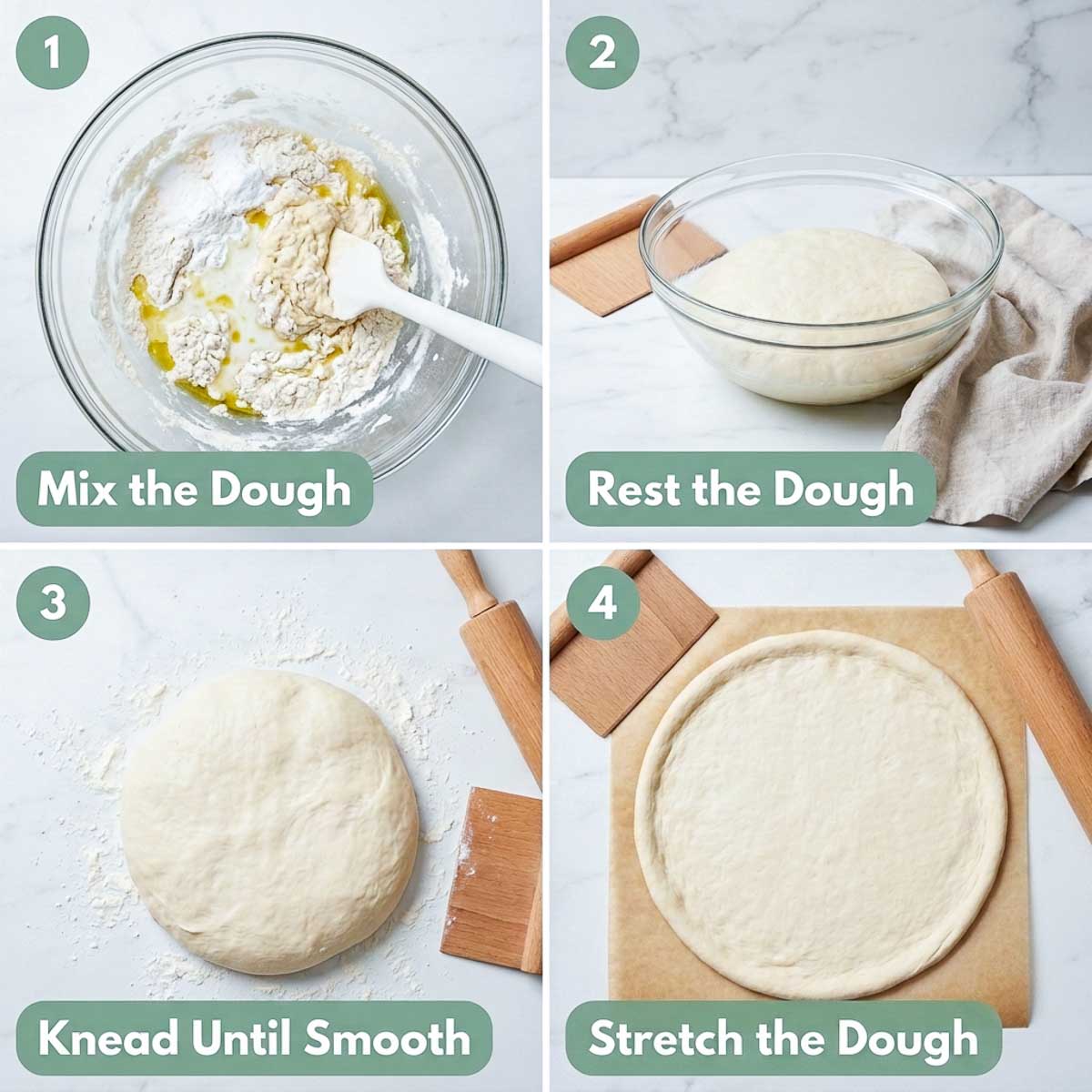
- Step 1: Mix the dough. Whisk the flour, baking powder, baking soda, and salt in a large bowl. Add the olive oil and about ¾ cup of the kefir. Stir, then add the remaining kefir a little at a time until a soft, slightly tacky dough forms and no dry flour remains. Kefir varies in thickness from brand to brand and batch to batch, so you may not need the full cup.
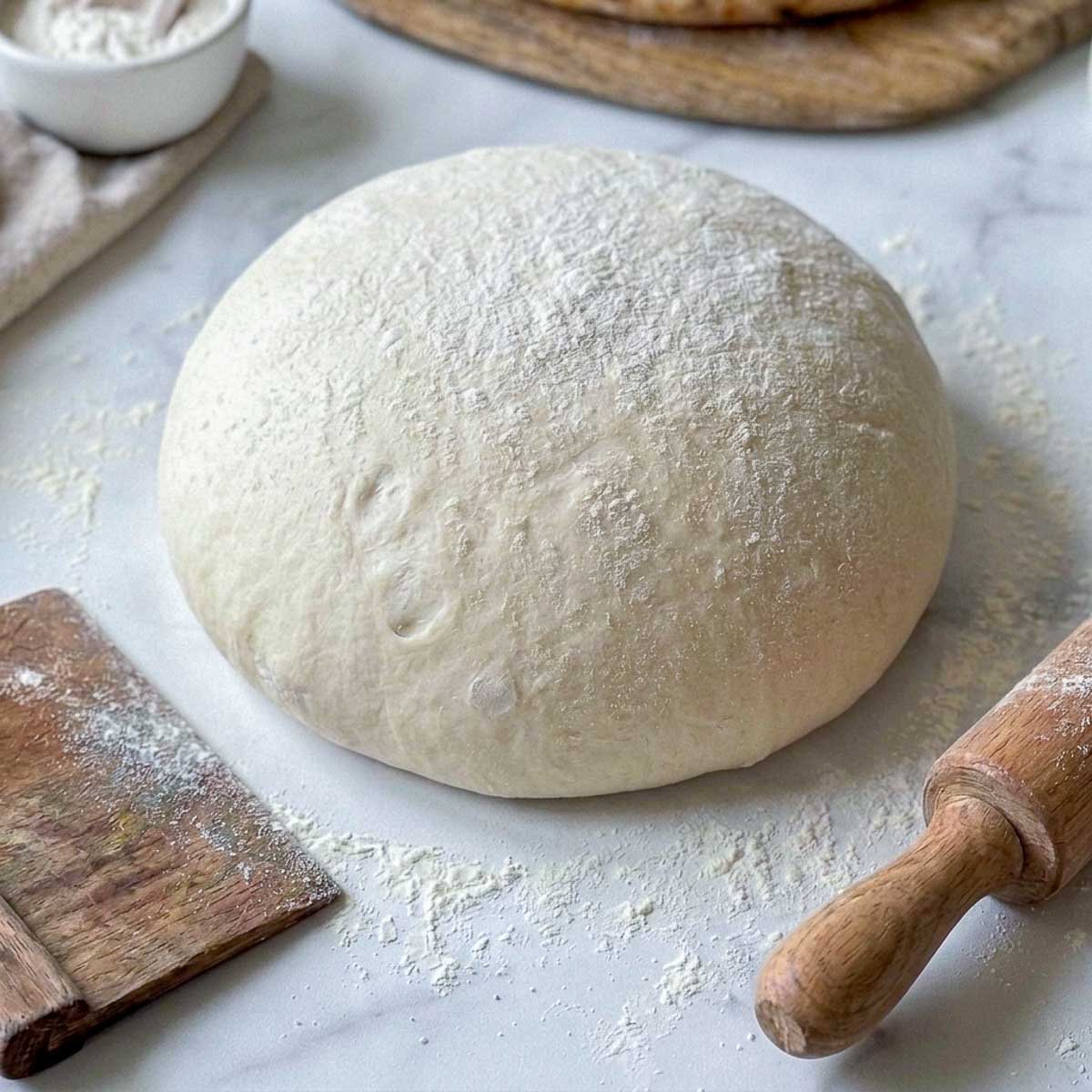
- Step 2: Rest the dough. Cover the bowl and let the dough rest for 30 minutes at room temperature. This is not a rise. The rest lets the flour fully hydrate, and the kefir's acidity relaxes the gluten so the dough stretches instead of snapping back. The dough should feel soft and slightly tacky but shouldn't stick heavily to your hands.
- Step 3: Knead until smooth. Turn the rested dough onto a lightly floured surface and knead for 2 to 3 minutes, just until smooth. It firms up noticeably as you work it. Divide into two equal pieces.
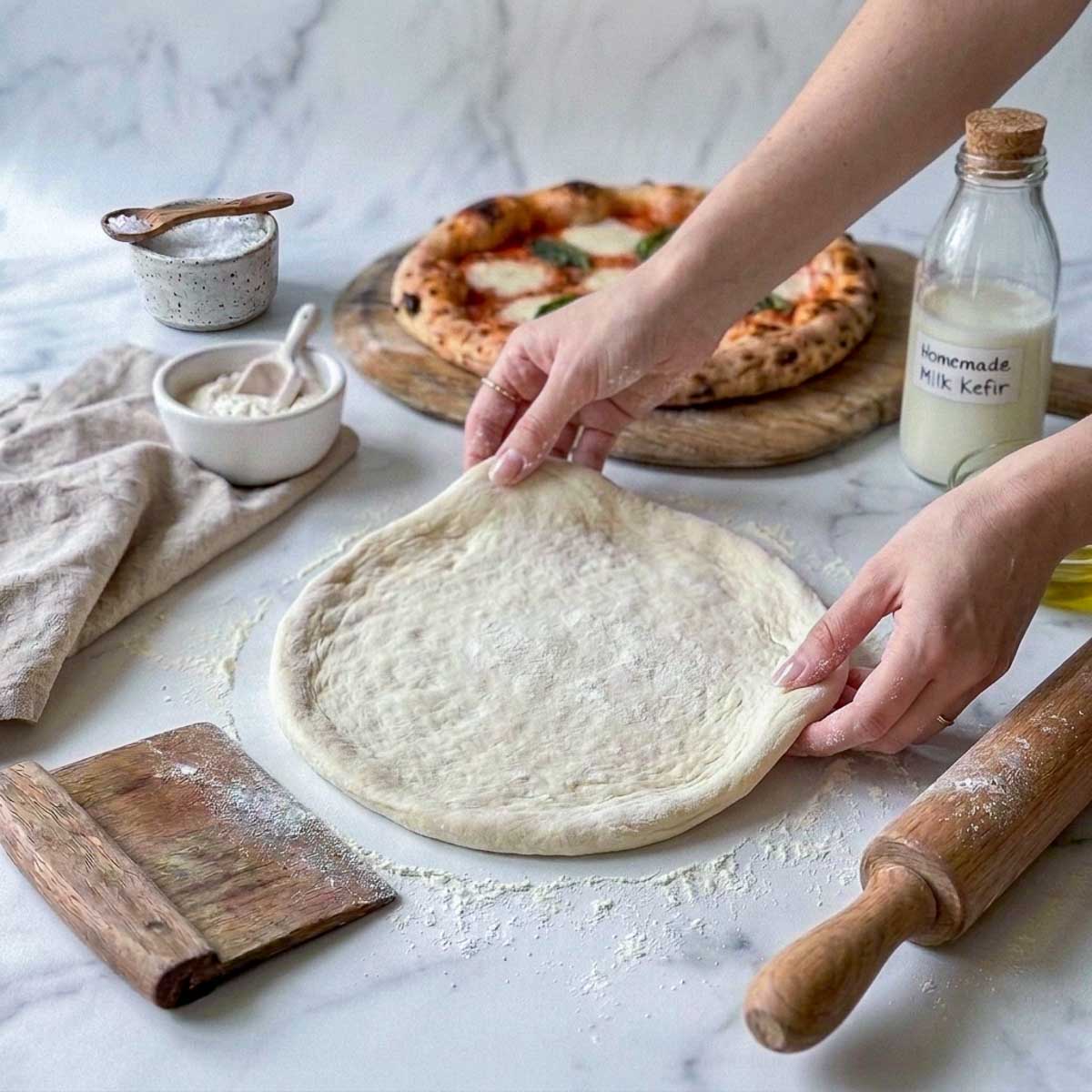
- Step 4: Stretch the dough. Roll or gently stretch each piece into an 11-inch round on parchment paper, keeping the center about ¼ inch thick and the edges slightly thicker. This easy pizza dough recipe with no yeast will not fight you the way a cold yeasted dough does.
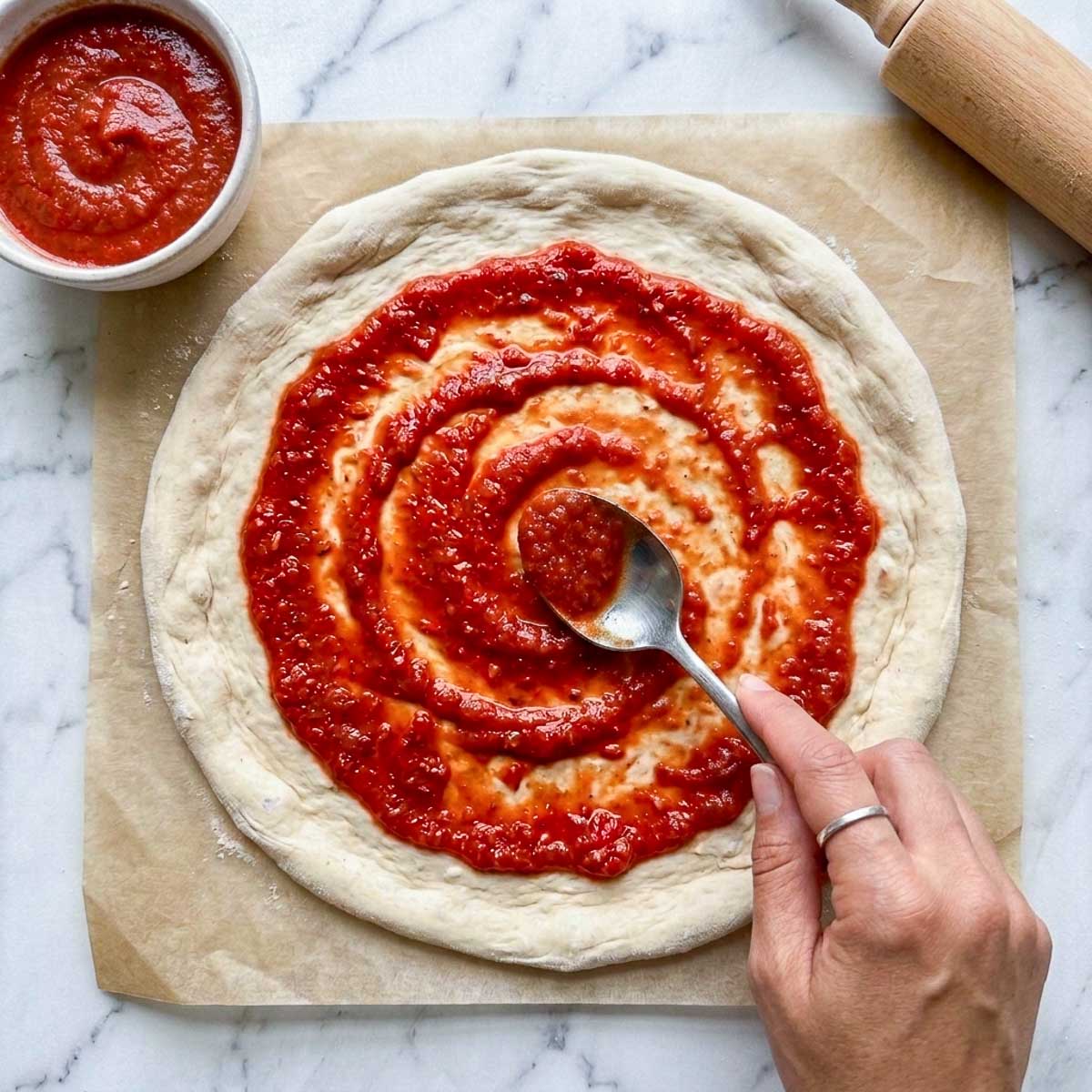
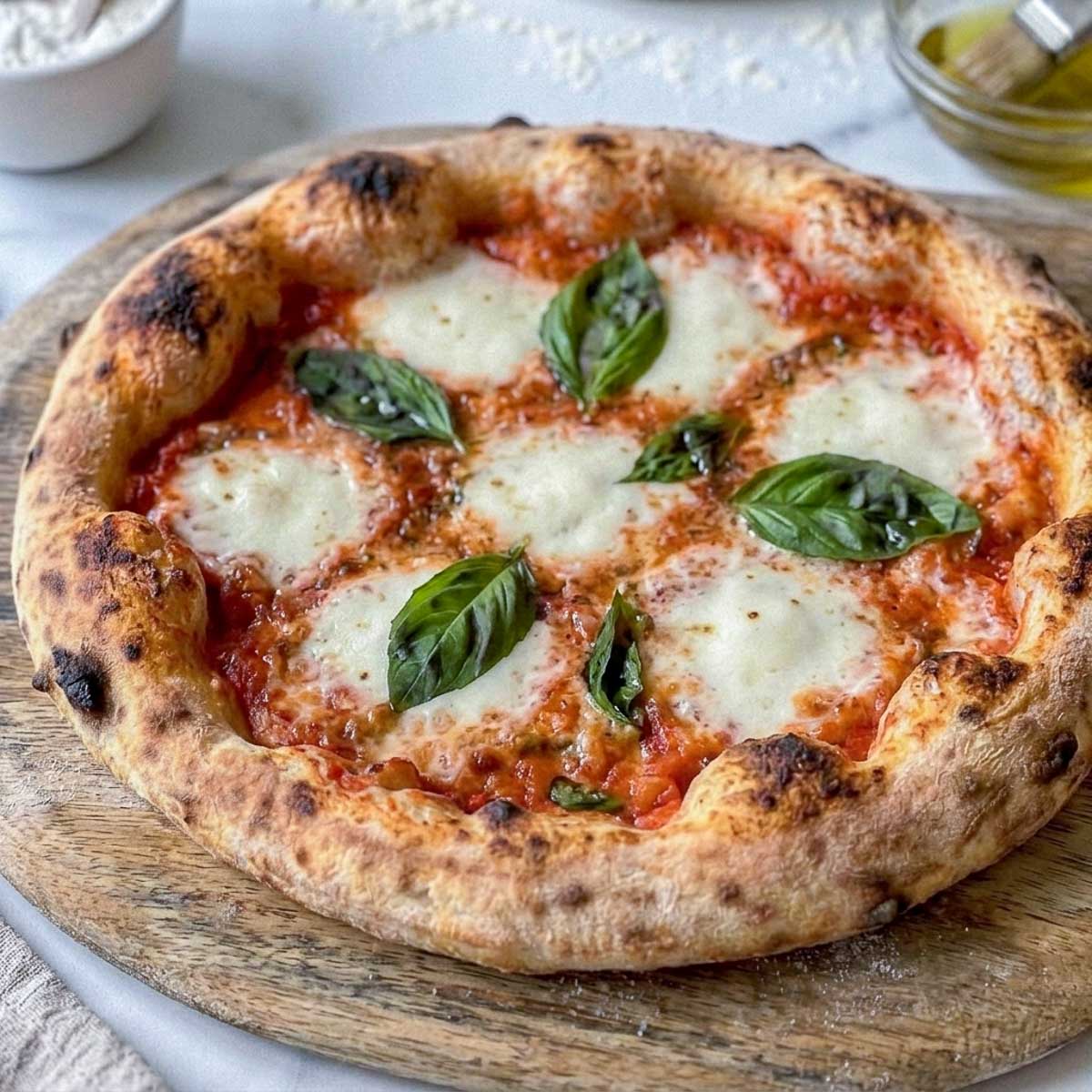
- Step 5: Top and bake. Spread on a thin layer of sauce, then add a moderate amount of cheese and toppings. Slide the pizza (on its parchment) onto the preheated surface. Bake for 12 to 15 minutes, until the edges are golden brown and the bottom of the crust is lightly browned and crisp.
What Does Kefir Do in Pizza Dough?
Kefir plays three roles in this homemade pizza dough. Its acidity reacts with the baking soda for lift, it tenderizes the gluten so the crumb stays soft, and its fermented tang mimics the flavor of a slow-proofed dough. You get a shortcut to the taste of my traditional homemade pizza dough in a fraction of the time. The same tenderizing works in a loaf pan, and this kefir bread with rosemary and thyme uses it for a soft sandwich crumb instead of a chewy base.
I made this dough a few times while working on the recipe and found that freshly fermented kefir gave me the most consistent results. The dough should feel soft and slightly tacky but shouldn't stick heavily to your hands. Once it stretches easily without springing straight back, it's ready to shape.
Kefir does similar work in sweet bakes. It is the same reaction driving my high-protein kefir banana bread, where the acid keeps the crumb tender without any protein powder.
Tips for the Best No-Yeast Crust
- Preheat the pan or stone. A hot surface is what gives a baking powder crust its oven spring and browned bottom. A cold sheet pan gives a paler, denser result.
- Do not skip the rest. Skipping the 30 minutes makes the dough springy and hard to stretch thin.
- Keep the center about ¼ inch thick. A no-yeast crust rolled ultra-thin can dry out before the toppings finish, so resist going paper thin.
- Go moderate on toppings. This dough is sturdy but not as airy as a yeasted one, so a thin sauce layer and a moderate hand with cheese keep the center crisp.
- Check the bottom, not just the top. Color on top isn't always enough. The crust is done when the underside is lightly browned and crisp.
On one batch, I added extra flour too quickly because the dough felt sticky at first. By the time it baked, the crust was noticeably denser than I wanted. Now I let the dough rest for 5 to 10 minutes before deciding whether it needs more flour. The flour has time to hydrate, and the dough usually becomes much easier to handle without making the finished crust heavy.
This dough is also my base for quick appetizer builds like mini caprese pizzas, and it swaps cleanly into my BBQ chicken flatbread pizza when I want dinner on the table faster than the flatbread dough allows. If you like baking with kefir, try these flaky kefir scones next for an easy breakfast or brunch bake. It is the base for the ghost pizza in these Halloween dinner ideas.
Recipe FAQs
Yes. Kefir's acidity paired with baking powder and a little baking soda leavens the dough chemically, so no yeast is needed. The crust bakes up soft and chewy with a light sourdough-style tang.
It has a mild tang, closer to a sourdough crust than a plain one. Once sauce, cheese, and toppings go on, the tang reads as depth of flavor rather than sourness. A fresher, milder kefir gives a more neutral crust.
Yes. Mix and rest the dough, then wrap it tightly and refrigerate for up to 24 hours. Let it sit at room temperature for 20 minutes before stretching. The tang deepens slightly overnight.
Yes. Freeze the kneaded dough balls in freezer bags for up to 2 months. Thaw overnight in the refrigerator, then bring to room temperature before stretching. Baked, cooled crusts also freeze well for up to a month.
Buttermilk is the closest swap and works measure for measure. Greek yogurt is too thick on its own; thin it with milk to a pourable, kefir-like consistency first. Both lose a little of the fermented depth kefir brings.
Kefir thickness varies from batch to batch, especially homemade. Before adding more flour, let the dough rest for 5 to 10 minutes so the flour can fully hydrate. It usually firms up on its own. If it still sticks heavily to your hands after that, work in flour one tablespoon at a time until it is soft and only slightly tacky.
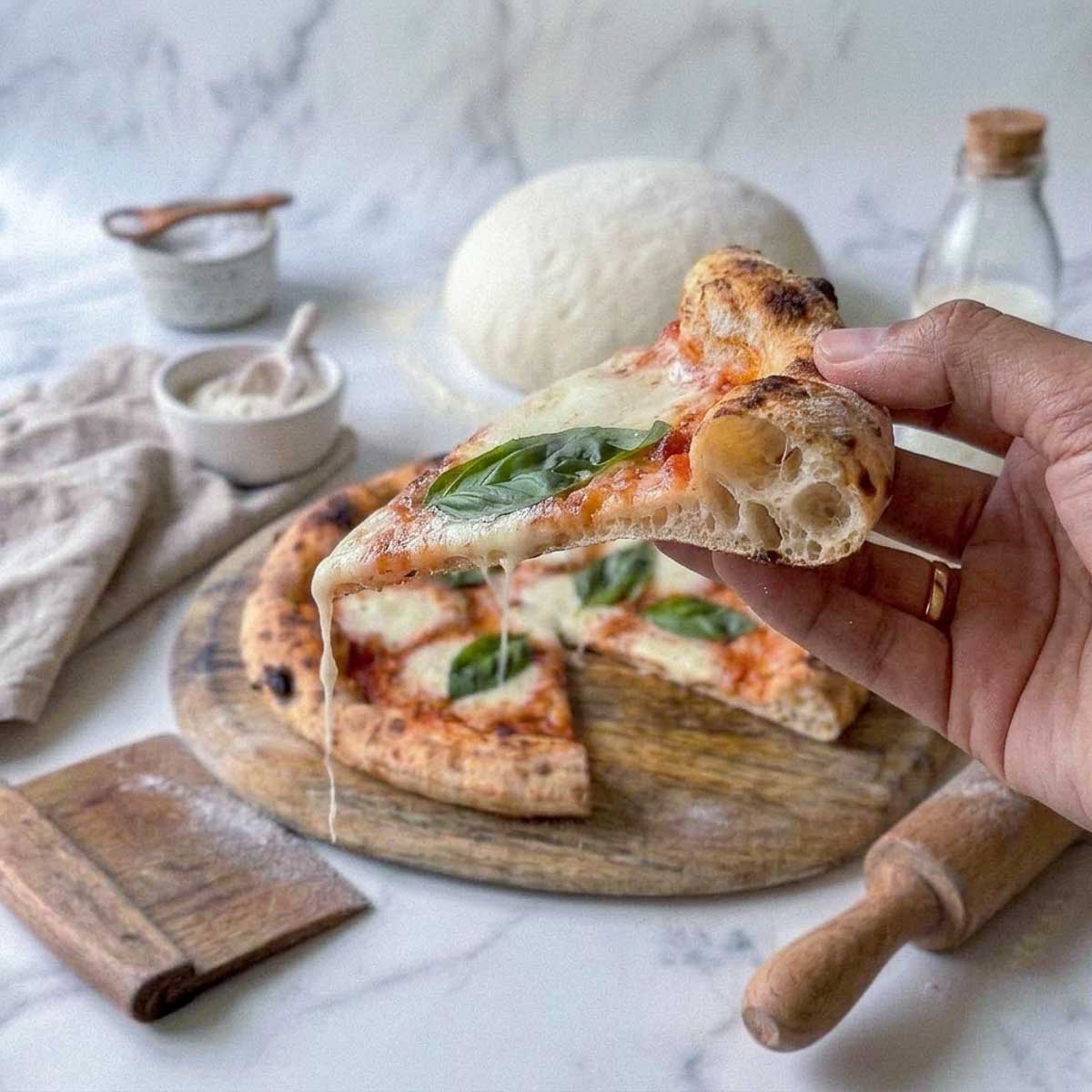
If you tried this Kefir Pizza Dough Recipe or any other recipe on my website, please leave a 🌟 star rating and let me know how it went in the 📝 comments below.
Equipment
- Whisk
- Parchment paper
- Pizza stone or baking sheet
- Knife
- Chopping board
Ingredients
- 2½ cups all-purpose flour plus more for dusting
- 2 teaspoons baking powder
- ½ teaspoon baking soda
- ¾ teaspoon salt
- 1 cup plain milk kefir at room temperature
- 2 tablespoons olive oil plus more for brushing
Instructions
- Place a pizza stone, pizza steel, pizza pan, or an inverted baking sheet in the oven. Preheat the oven to 475°F.
- In a large bowl, whisk together the flour, baking powder, baking soda, and salt.
- Add the olive oil and about ¾ cup of the kefir. Stir, adding the remaining kefir a little at a time, until a soft, slightly tacky dough forms and no dry flour remains. Cover the bowl and let the dough rest at room temperature for 30 minutes.
- Transfer the dough to a lightly floured surface and knead for 2 to 3 minutes, until smooth. Divide into 2 equal pieces.
- Roll or gently stretch each piece into an 11-inch round, leaving the edges slightly thicker than the center.
- Spread a thin layer of pizza sauce over the dough. Add cheese and your favorite toppings, keeping them fairly light so the crust bakes evenly.
- Carefully slide the pizza, still on the parchment paper, onto the preheated baking surface.
- Bake for 12 to 15 minutes, until the edges are golden brown and the bottom of the crust is lightly browned and crisp. Brush the crust lightly with olive oil. Slice and serve warm.
Notes
- The dough should feel soft and slightly tacky but shouldn't stick heavily to your hands. Avoid adding extra flour unless it's truly necessary.
- Freshly fermented kefir with a mild tang produces the best flavor and texture.
- This recipe works well with a pizza stone, steel, or preheated baking sheet.
- Don't overload the pizza with sauce or toppings, or the center may stay soft.
- Bake one pizza at a time for the crispiest crust.