
Kefir Scones: Flaky, Buttery, and Easy to Make with Homemade Kefir
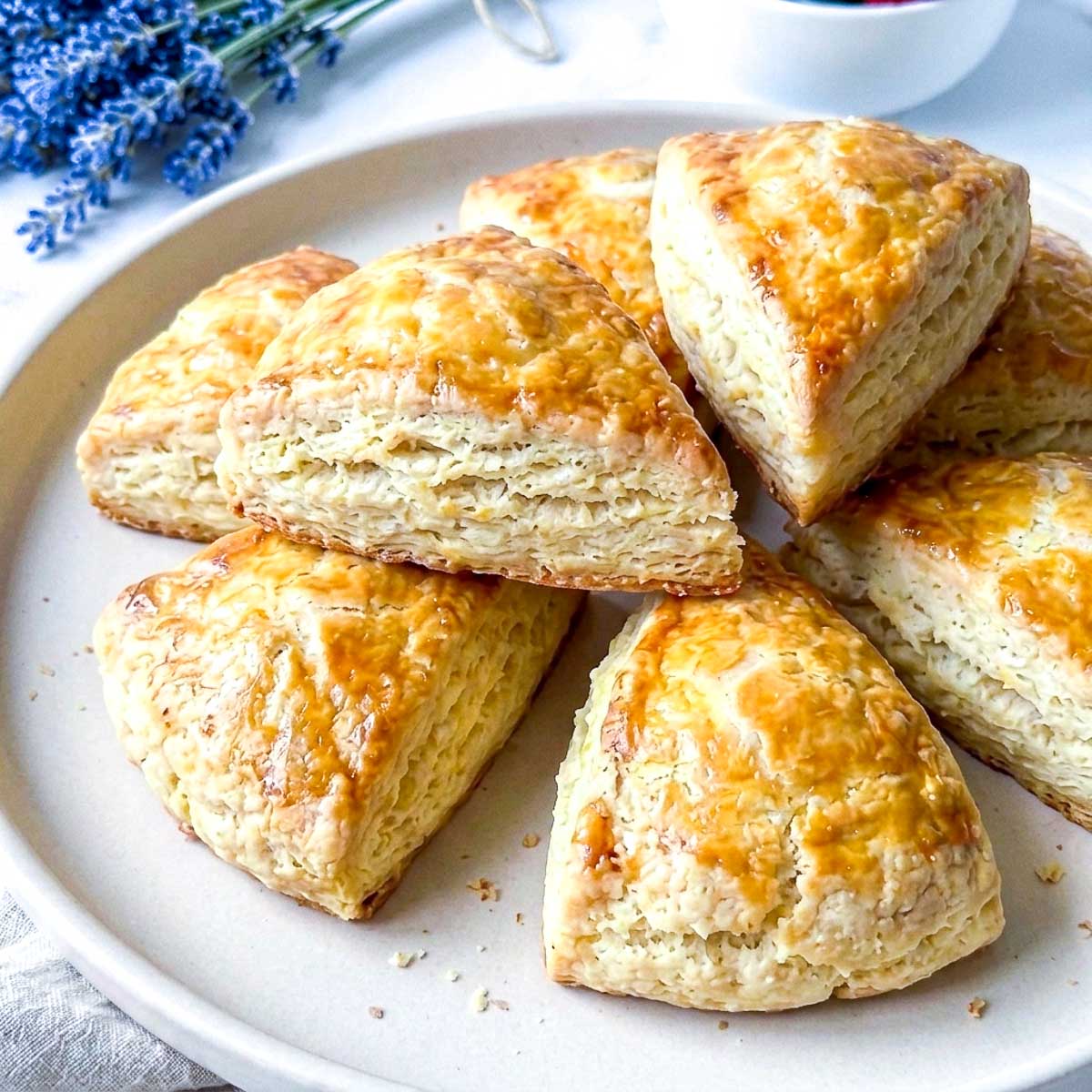
Kefir scones are made by swapping milk kefir in for the buttermilk or heavy cream in any easy scones recipe, using a one-to-one ratio. The kefir's acidity reacts with baking soda for lift and tenderizes the gluten, giving you a scone that bakes up flaky and layered with a soft, close crumb.

Disclosure: This post may contain affiliate links. This means I get a small commission if you decide to make a purchase through my links at no extra cost to you.
Cut cold butter into the dry ingredients, stir in cold kefir, pat and fold the dough once, cut into wedges, and bake at 400°F for 18 to 22 minutes. You get 8 scones in under an hour, and you do not need a mixer. The one thing most kefir scone recipes skip: homemade kefir varies in thickness from batch to batch, and that changes your dough. The fix is below.
Jump to:

Why You'll Love These Kefir Scones
- One bowl, no mixer. About as easy as a scone recipe gets.
- A real use for surplus kefir.
- Flaky layers. One fold before cutting builds visible sheets.
- Freezer-friendly. Freeze raw, bake from frozen.
- Not too sweet. Buttery and tangy, so jam and butter have somewhere to go.
Kefir vs. Buttermilk in Scones
Milk kefir replaces buttermilk one-to-one, so any recipe for buttermilk scones already works with kefir. Both are cultured dairy: the lactic acid reacts with baking soda for lift and softens the gluten so the crumb stays tender.
Two differences matter. Kefir is usually more acidic, so it browns faster; this recipe bakes at 400°F instead of 425°F for that reason. And homemade kefir varies in thickness, which changes how much your flour absorbs. Kefir does the same job in frozen desserts that it does in baking. Kefir ice cream uses its acidity to cut the sweetness of condensed milk.
I make these with my homemade milk kefir, and I've noticed that every batch behaves a little differently. Some days the dough comes together with no extra flour at all, while other times I need a light dusting on the counter. I've learned to go by how the dough feels instead of adding flour all at once.
How to Adjust for Your Kefir's Thickness
Pour a spoonful and watch how it falls.
- Thin (runs like heavy cream, ~12-hour ferment). Hold back 2 tablespoons; add only if the dough will not come together.
- Just right (ribbons off the spoon, ~24 hours). Use the full ⅔ cup as written. Store-bought kefir is almost always here.
- Thick (plops in a lump, ~36 hours or strained). Use the full ⅔ cup, then loosen with milk 1 teaspoon at a time.
When I pat the dough into a round, I still want to see a few dry streaks of flour and small pieces of butter throughout. If the dough looks completely smooth before it goes into the oven, I know I've worked it too much, and the scones won't be as flaky.
Key Ingredients
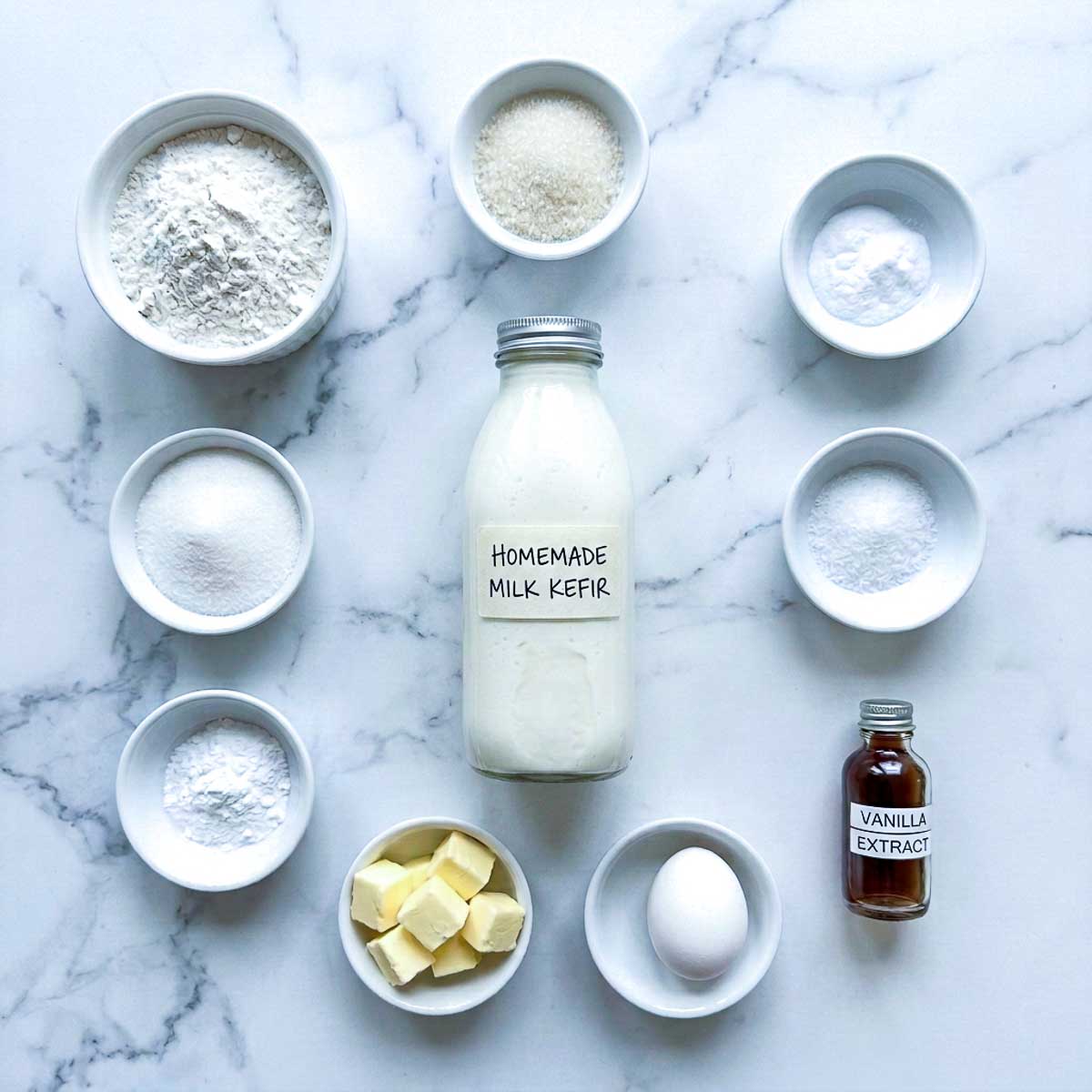
- Milk kefir. Plain, unsweetened, cold. Homemade or store-bought. Flavored kefir sweetens the dough unpredictably.
- Cold unsalted butter. Cubed, left in visible pea-sized pieces. Those pieces steam apart in the oven and open the layers.
- All-purpose flour. Not bread flour; the extra protein makes the crumb chewy. Baking powder and baking soda. The soda meets the kefir's acid; the powder handles the rest of the lift.
- Egg. Binds the high-fat dough so the wedges hold their shape.
See the recipe card for the complete list of ingredients and quantities.
How to Make Kefir Scones
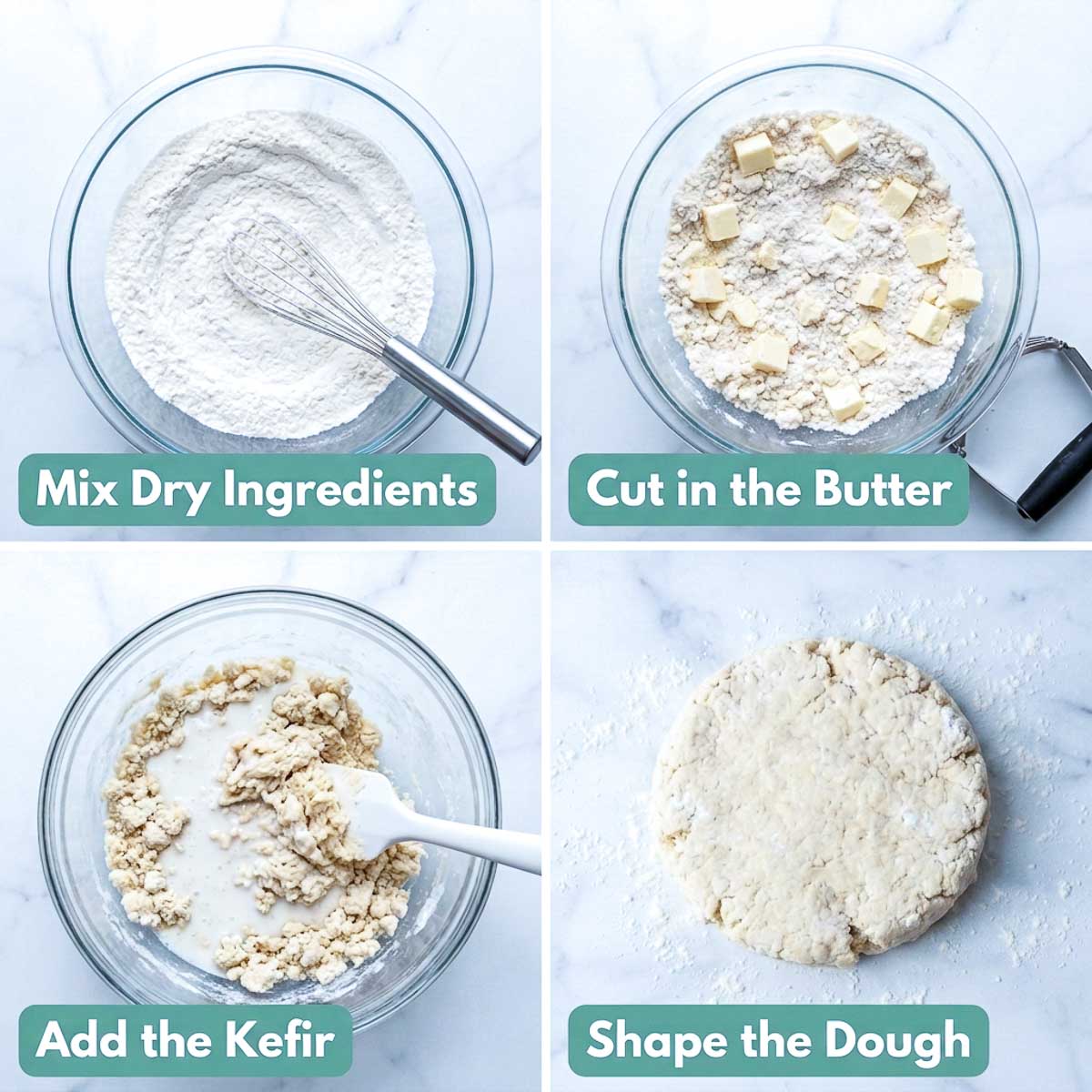
- Step 1: Mix the dry ingredients. Whisk the flour, granulated sugar, baking powder, baking soda, and salt in a large bowl. Whisk thoroughly; pockets of baking soda leave bitter spots.
- Step 2: Cut in the butter. Cut the cold cubes in with a pastry cutter or your fingertips until the mixture looks like coarse crumbs with pea-sized butter pieces still visible. If the butter smears into wet sand, chill the bowl 10 minutes and carry on.
- Step 3: Add the kefir. Whisk the kefir, egg, and vanilla together and pour into the flour. If your kefir is thin, hold back 2 tablespoons and add them only if needed. Stir just until a shaggy dough forms; a few dry patches are fine.
- Step 4: Shape the dough. On a lightly floured surface, press into a rough 8-inch round, fold in thirds like a letter, then press back into a 7-inch round about 1¼ inches thick. That one fold stacks the layers.
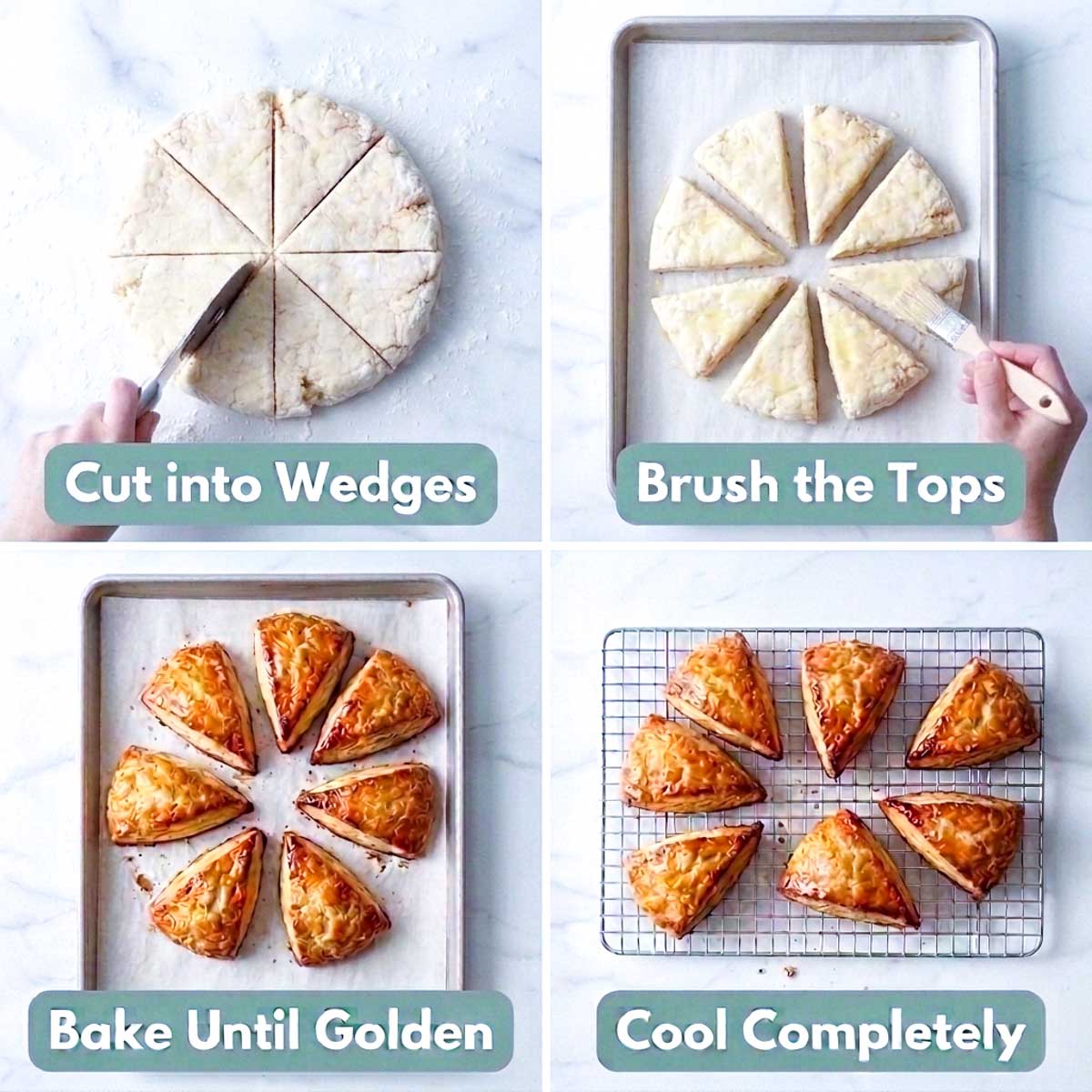
- Step 5: Cut into wedges. Cut into 8 wedges, pressing straight down; dragging the blade seals the edges shut. Space them on a parchment-lined sheet.
- Step 6: Chill. Freeze the tray for 15 minutes to re-firm the butter. Preheat the oven to 400°F while it chills.
- Step 7: Brush the tops. Brush with the reserved tablespoon of kefir and sprinkle with coarse sugar.
- Step 8: Bake. Bake at 400°F for 18 to 22 minutes, until deep golden and 200°F to 205°F in the center. Cool on a wire rack 10 minutes.
How to Get Flaky Layers in Kefir Scones
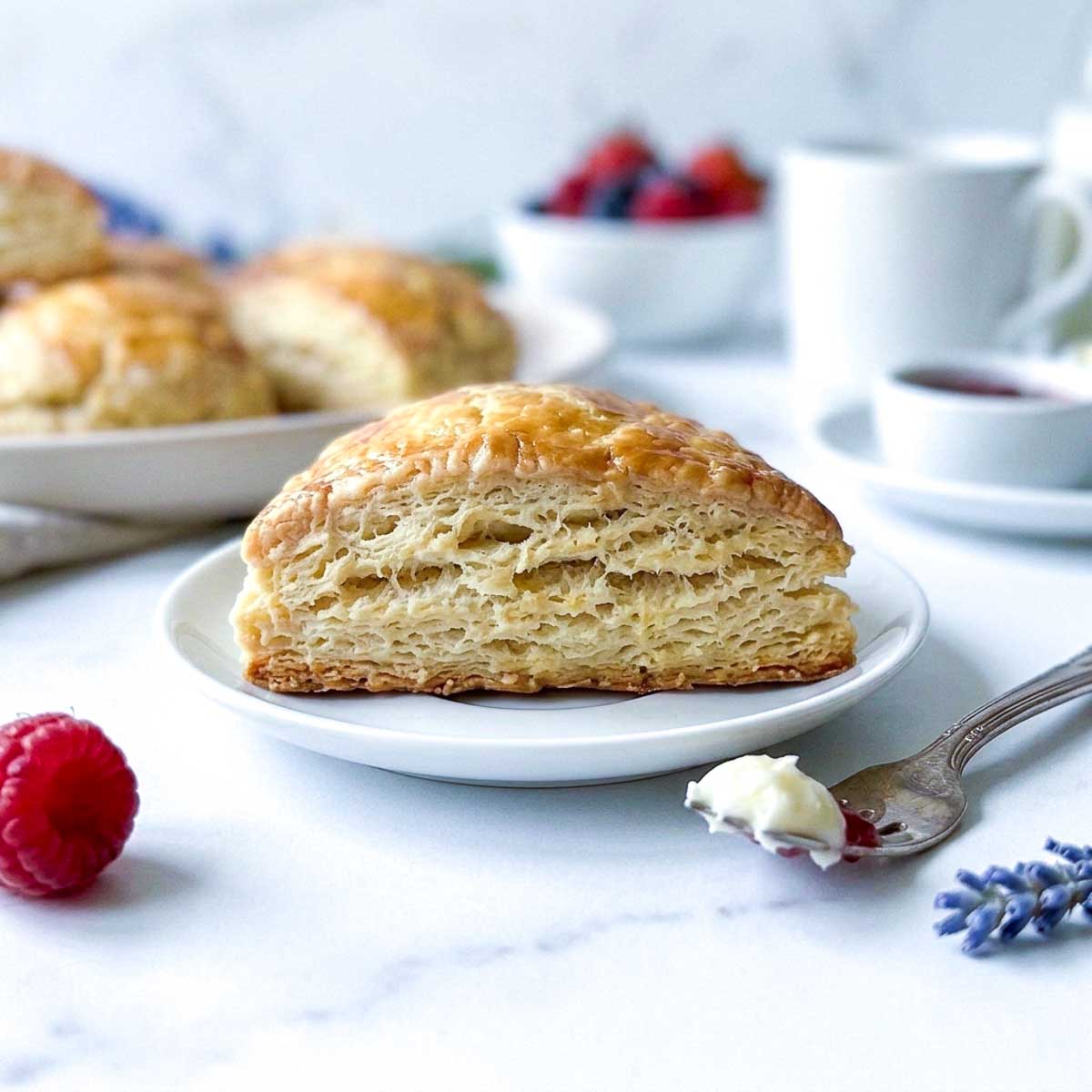
- Keep the butter cold and lumpy. Each pea-sized piece leaves a steam pocket.
- Fold once. The letter fold in Step 4 stacks the dough into three sheets.
- Chill before baking. Softened butter leaks out and fries the base instead of steaming upward.
- Cut cleanly. A dragged blade crimps the layers closed at the edge.
One batch turned much stickier than I expected after I mixed in the kefir. Instead of kneading in more flour, I lightly floured the counter and folded the dough a few times with slightly damp hands. That was enough to bring it together without drying it out, and the scones baked up soft inside with flaky layers.
How to Serve Kefir Scones
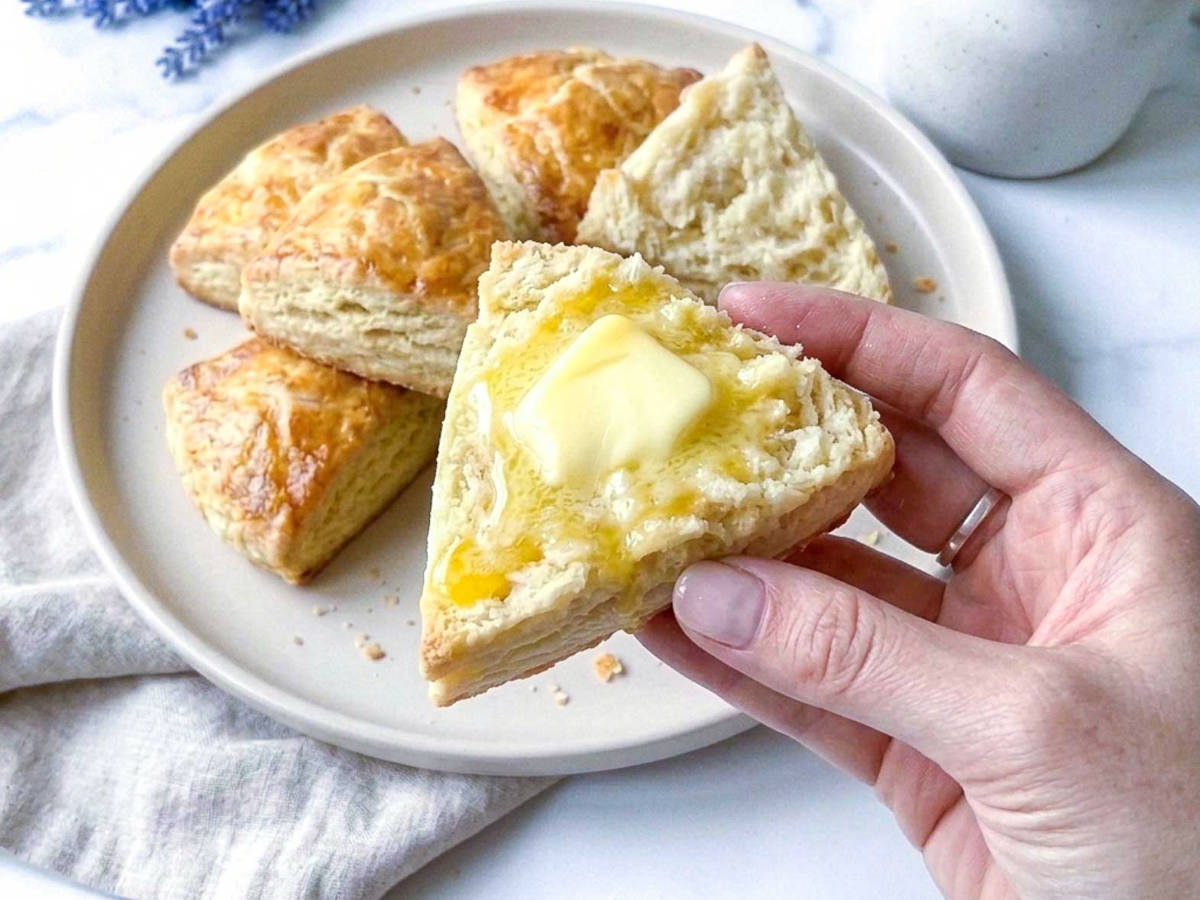
Warm, split, with butter melting into the layers. Whipped honey spreads over a warm scone without tearing it, jam from these rhubarb jam recipes plays well with the tang, or skip the coarse sugar and go savory with homemade scallion butter.
To drink, strong black tea cuts the butter cleanly. Here is a rundown of types of tea worth keeping around, or make a London fog latte for the full tea-room version.
Pin It For Later

More Ways to Use Milk Kefir
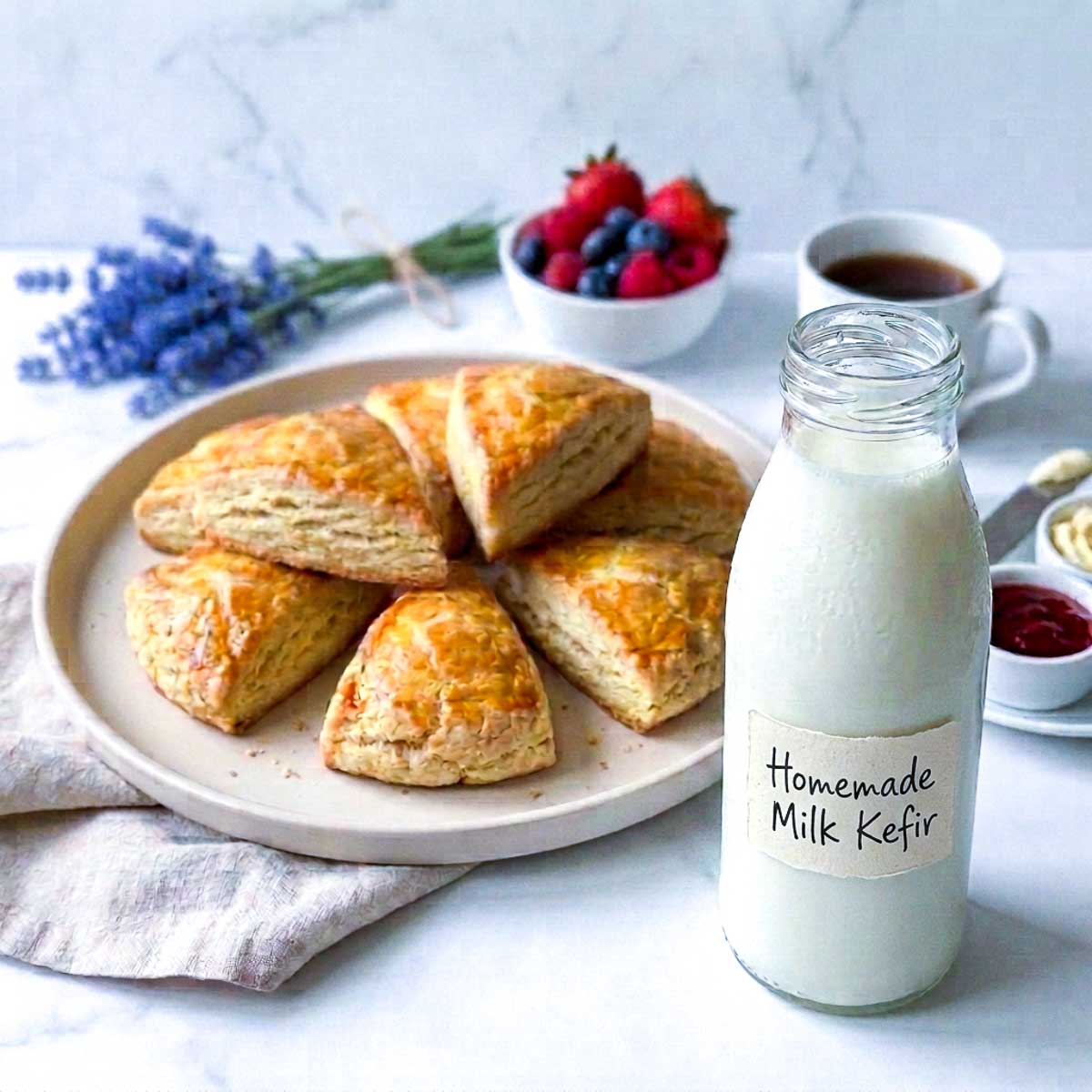
Start with how to make milk kefir at home if you are not culturing your own yet; ferment time is what determines the thickness question above.
Kefir drops into anything that calls for buttermilk. These buttermilk drop biscuits take the swap with no other change, and so does buttermilk fried chicken. Once you have the fold-and-wedge method down, pumpkin spice scones run on the same technique, and if a bake goes sideways, common bread baking problems covers the usual causes.
Kefir Scones FAQ
Yes, one-to-one, with no other changes. Kefir is usually a little more acidic and browns faster, which is why this recipe bakes at 400°F. The same swap turns any buttermilk scones recipe into kefir scones.
Yes. Hold back 2 tablespoons and add them only if the dough refuses to come together. Thin kefir means a shorter ferment.
No. Oven heat deactivates the live cultures. Kefir earns its place here as an acid and a tenderizer; drink it cold for the cultures.
Almost always warm butter or overworked dough. Also check that your baking powder is still active; expired powder makes scones that read like shortbread.
Both. Freeze-cut wedges raw, bag up to 3 months, and bake from frozen with 3 to 5 extra minutes. Baked scones keep airtight for 2 days and reheat at 300°F for 5 minutes.
Store-bought plain kefir works perfectly and is more consistent than homemade. Skip flavored; the added sugar throws off sweetness and browning.
If you tried this Kefir Scone Recipe or any other recipe on my website, please leave a 🌟 star rating and let me know how it went in the 📝 comments below.

Equipment
- Pastry cutter
- Parchment paper
- Wire cooling rack
- Pastry brush
Ingredients
- 2½ cups all-purpose flour spooned and leveled
- ⅓ cup granulated sugar
- 2 tsps baking powder
- ½ teaspoon baking soda
- ¾ teaspoon fine sea salt
- ½ cup cold unsalted butter cut into ½-inch cubes
- ⅔ cup cold plain milk kefir plus 1 tablespoon for brushing
- 1 large egg cold
- 2 tsps vanilla extract
- 2 tbsps coarse sugar for sprinkling
Instructions
- Line a baking sheet with parchment paper. Do not preheat the oven yet; the dough chills first.
- Whisk the flour, granulated sugar, baking powder, baking soda, and salt together in a large bowl until fully combined.
- Add the cold butter cubes. Cut in with a pastry cutter or rub between your fingertips until the mixture resembles coarse crumbs with visible pea-sized pieces of butter remaining.
- Whisk the ⅔ cup kefir, egg, and vanilla together in a small bowl. Pour into the flour mixture, holding back 2 tablespoons if your kefir is thin (see Notes). Stir with a spatula just until a shaggy dough forms. A few dry patches are fine. Do not overmix.
- Turn the dough onto a lightly floured surface. Press into a rough 8-inch round, fold in thirds like a letter, then press back into a 7-inch round about 1¼ inches thick.
- Cut into 8 wedges, pressing straight down. Space them on the prepared baking sheet.
- Freeze the tray for 15 minutes. Preheat the oven to 400°F while it chills.
- Brush the tops with the reserved 1 tablespoon kefir and sprinkle with coarse sugar.
- Bake for 18 to 22 minutes, until deep golden on top and 200°F in the center. Cool on a wire rack for at least 10 minutes before serving.
Notes
- Kefir thickness: if your homemade kefir is thin enough to run off a spoon like cream, hold back 2 tablespoons and add back only if needed. If it is thick enough to plop, loosen with milk 1 teaspoon at a time.
- Butter temperature is the whole recipe. If it softens while you work, chill the bowl for 10 minutes.
- Freeze raw: freeze cut wedges on the tray, bag up to 3 months, bake from frozen with 3 to 5 extra minutes.
- Storage: airtight, 2 days at room temperature. Reheat for 5 minutes at 300°F.
- Do not substitute bread flour. The crumb turns chewy.