
Kefir Bread with Fresh Herbs: Soft, Golden, and Great for Sandwiches
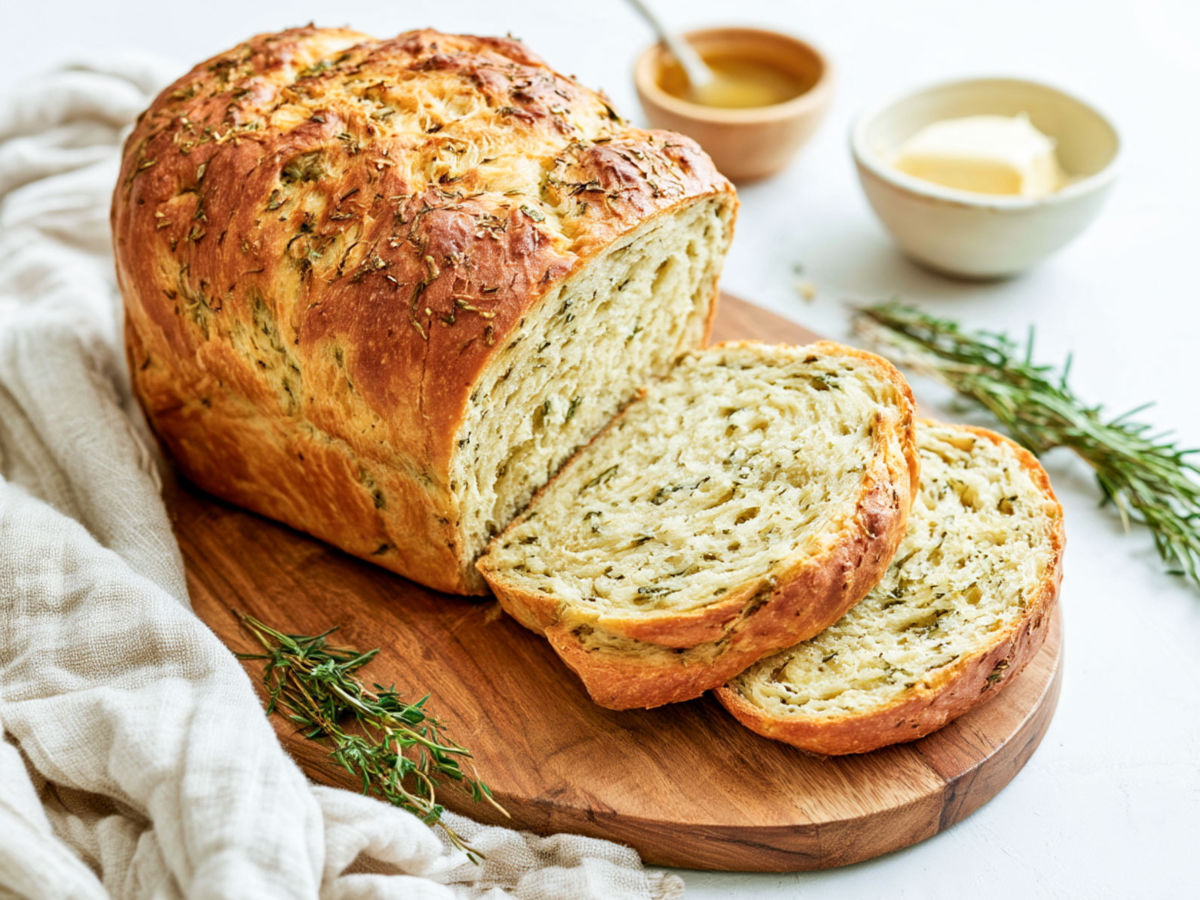
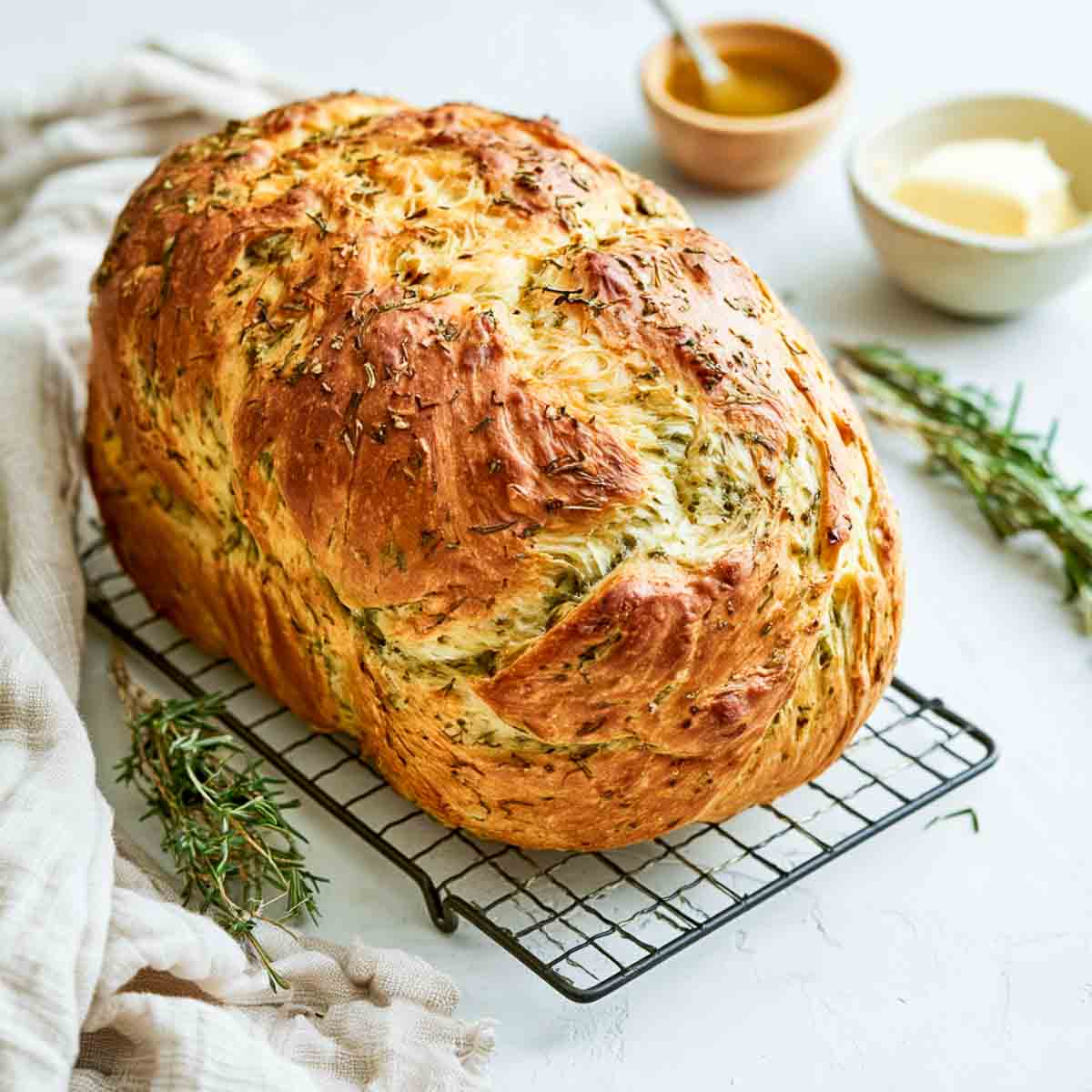
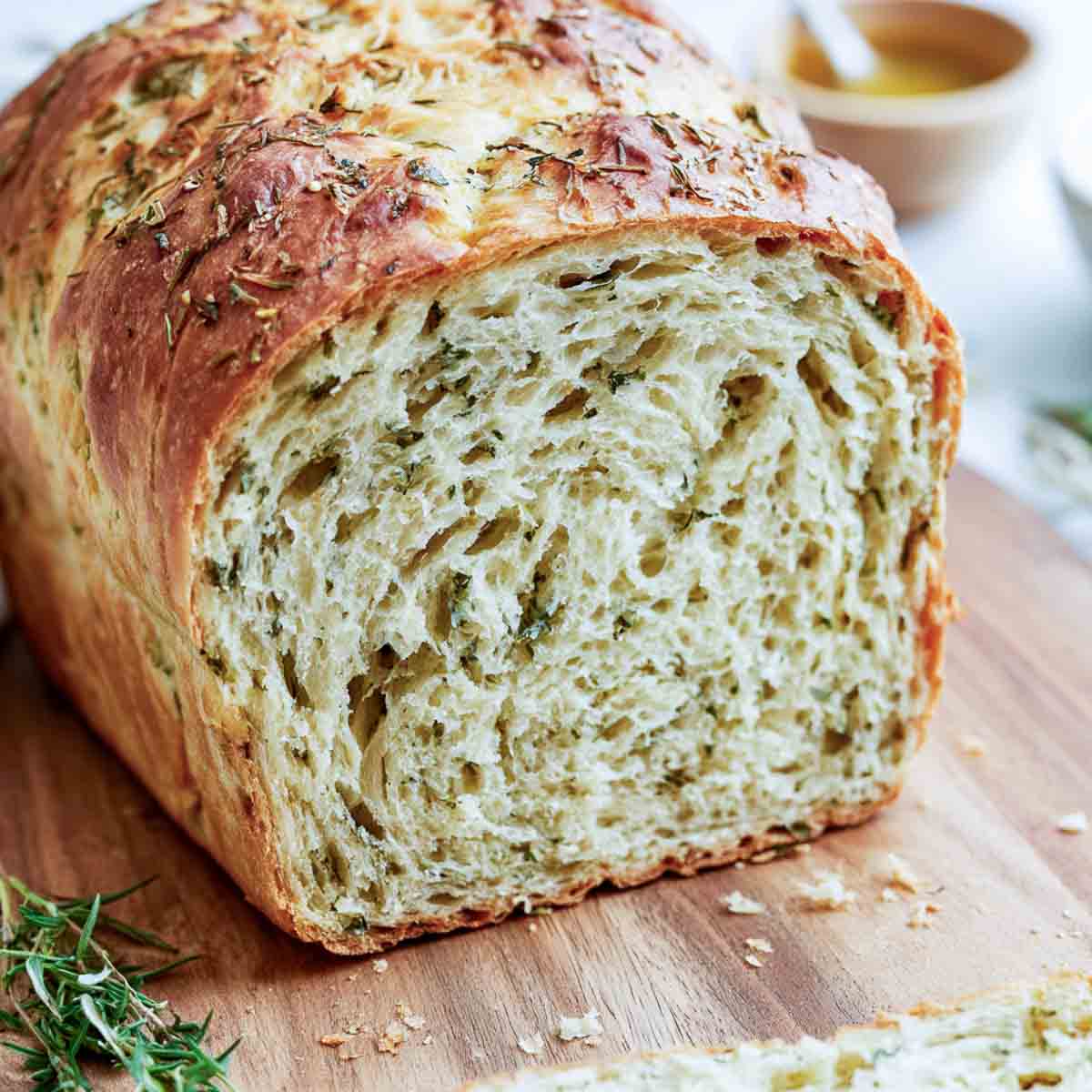
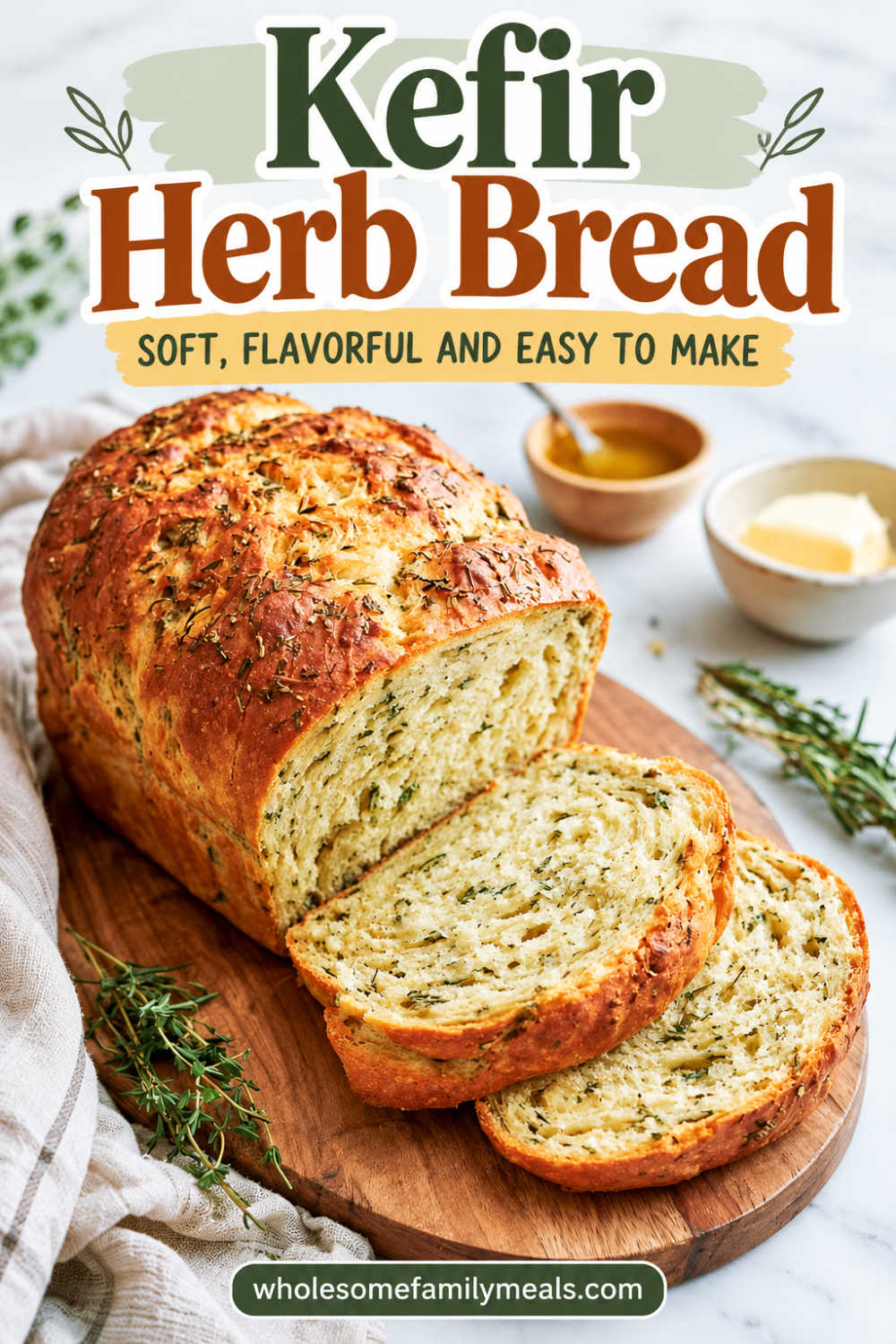
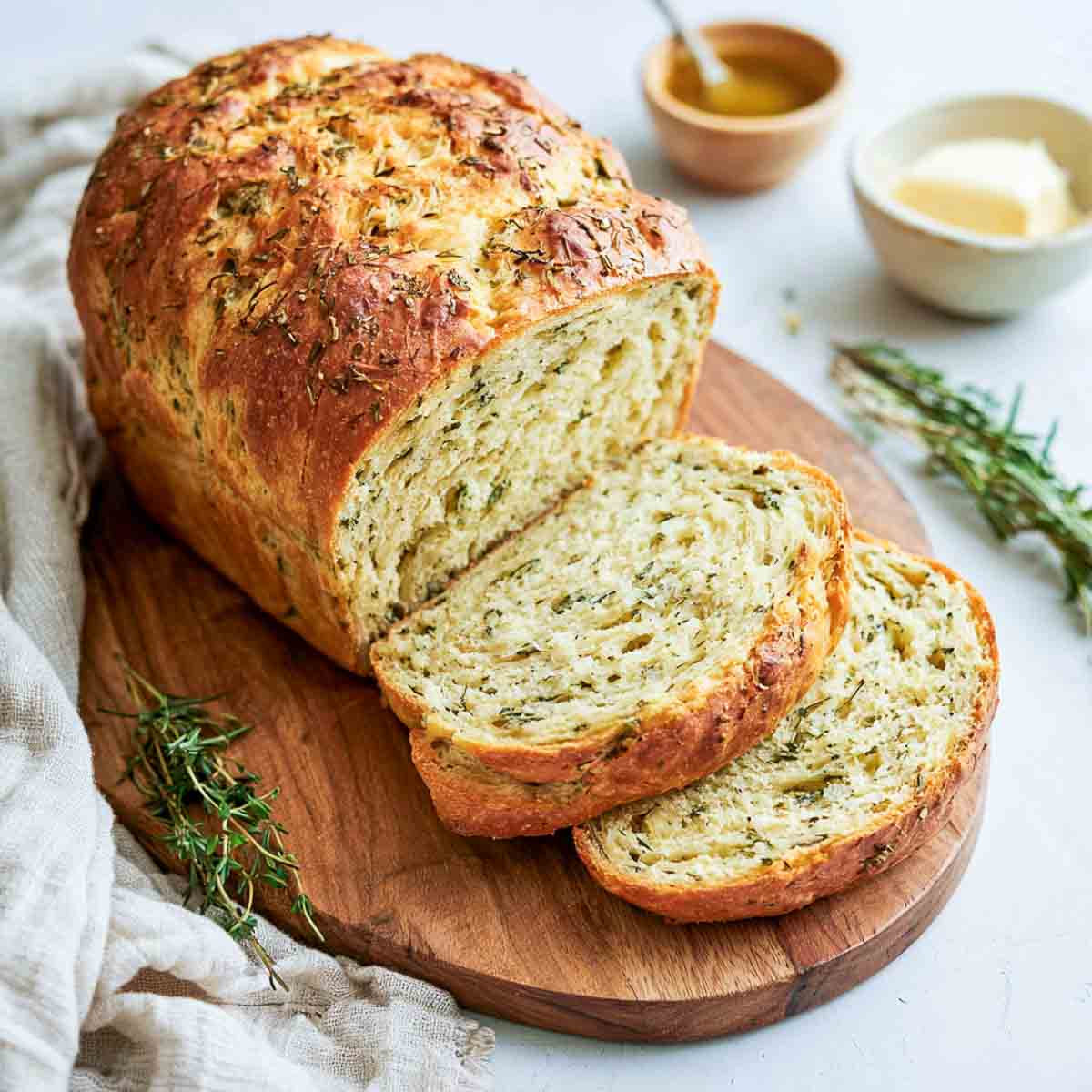
Kefir bread is a savory loaf with a soft, close crumb that slices clean and stays tender for days. The crust bakes deep gold with rosemary and thyme showing through, and the herbs run all the way into the crumb rather than sitting on top. Kefir is what keeps it soft, and it is the reason this slices more like a bakery sandwich loaf than a chewy artisan boule.
Disclosure: This post may contain affiliate links. This means I get a small commission if you decide to make a purchase through my links at no extra cost to you.
It runs about 2 hours 45 minutes start to finish, most of that hands-off, with no starter to keep alive. Two things decide how it turns out. Kefir thickness swings hard between brands and between batches of homemade, so hold back a tablespoon or two and add it only if the dough feels stiff. And the second rise runs longer than a lean dough would, because the egg, butter, and honey slow fermentation down.
Jump to:

Why You'll Love This Kefir Bread
- Mix it after lunch and slice it before dinner, with no overnight wait.
- It puts the half bottle of kefir in the fridge door to work.
- The crumb is close enough to hold a filling without tearing.
- Savory without cheese, this homemade bread with fresh herbs sits beside soup or eggs instead of competing with them.
- An easy yeast bread that needs one bowl, one pan, and a packet of yeast.
Pin It For Later

Ingredients and Substitutes
The ingredients for baking with kefir are ordinary. These are the four that decide how this herb bread recipe turns out.
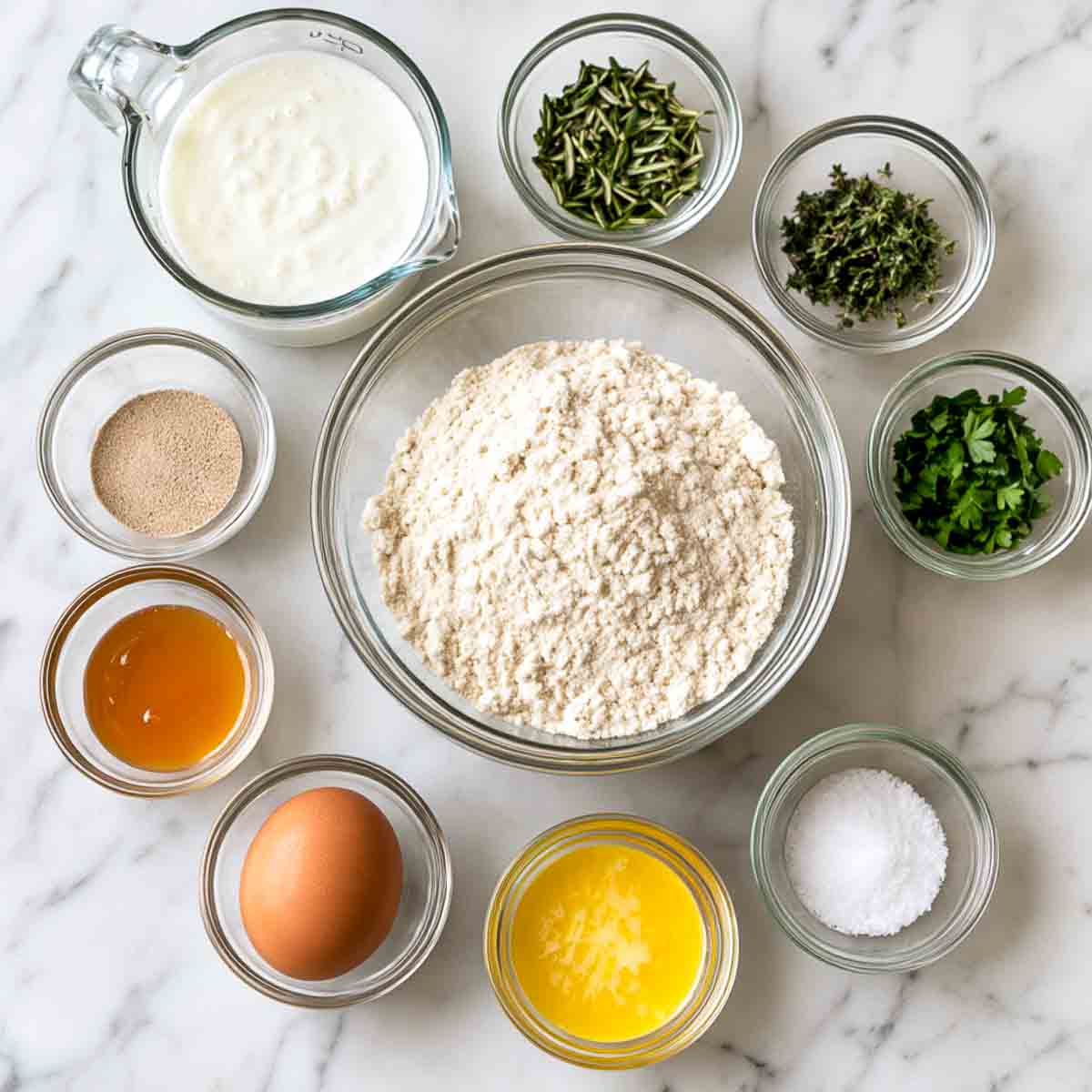
- Plain whole milk kefir. Use it unflavored and unsweetened, and if you make your own milk kefir from grains, this is one of the better ways to spend a cup of it. Most recipes using plain kefir come down to treating it like buttermilk, which is also the closest swap here, and that is most of what there is to know about how to use kefir in baking. Plain yogurt loosened with a splash of milk works too. Water kefir does not, since it brings none of the fat or protein the dough needs.
- Bread flour. Worth buying rather than reaching for all-purpose. Kefir is acidic, and acid softens gluten, so the extra protein is what holds the tall crown and keeps the crumb from going squat. All-purpose still works and still tastes good, but expect a shorter, tighter loaf.
- Fresh rosemary, thyme, and parsley. Two woody herbs and one soft one. They go in with the flour so they spread through the crumb, and the baked loaf gets brushed with butter rather than topped with more herbs beforehand, since delicate leaves scorch on an exposed crust.
- Honey. One tablespoon, there for crust color and a little tenderness rather than sweetness. You will not taste it as sweet at that quantity. What it does do is brown the top faster, which is why the oven sits at 350°F and the foil comes out partway through.
How To Make Milk Kefir Bread
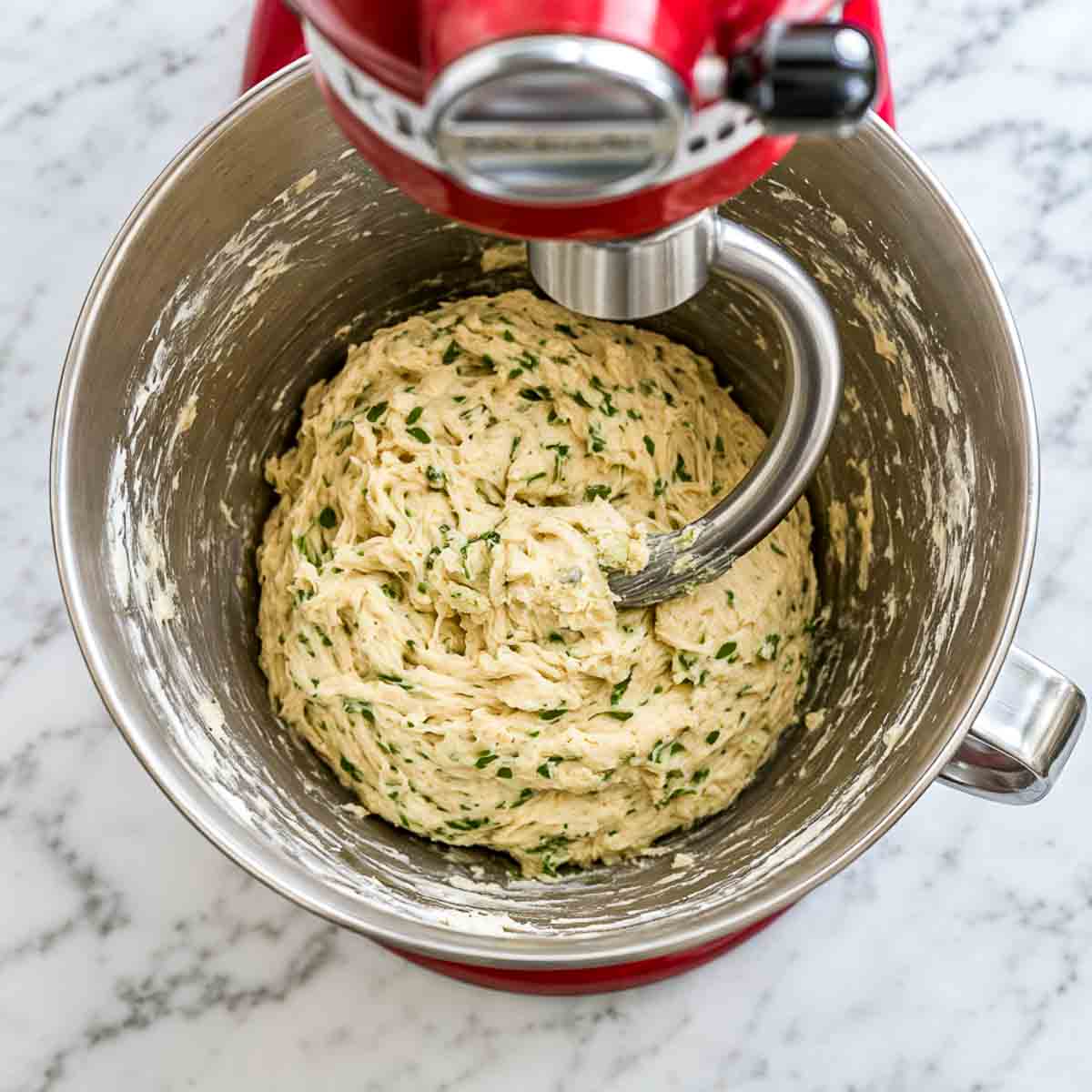
Take the chill off the kefir first, since straight from the fridge it will stall the first rise. Twenty seconds in the microwave gets it to the barely-warm 100°F the yeast wants. Whisk it with the egg, melted butter, and honey, then add the flour, yeast, salt, and chopped herbs. Mix to a shaggy dough, then knead for 6-8 minutes by hand or 5 minutes on a stand mixer, until smooth and slightly tacky.
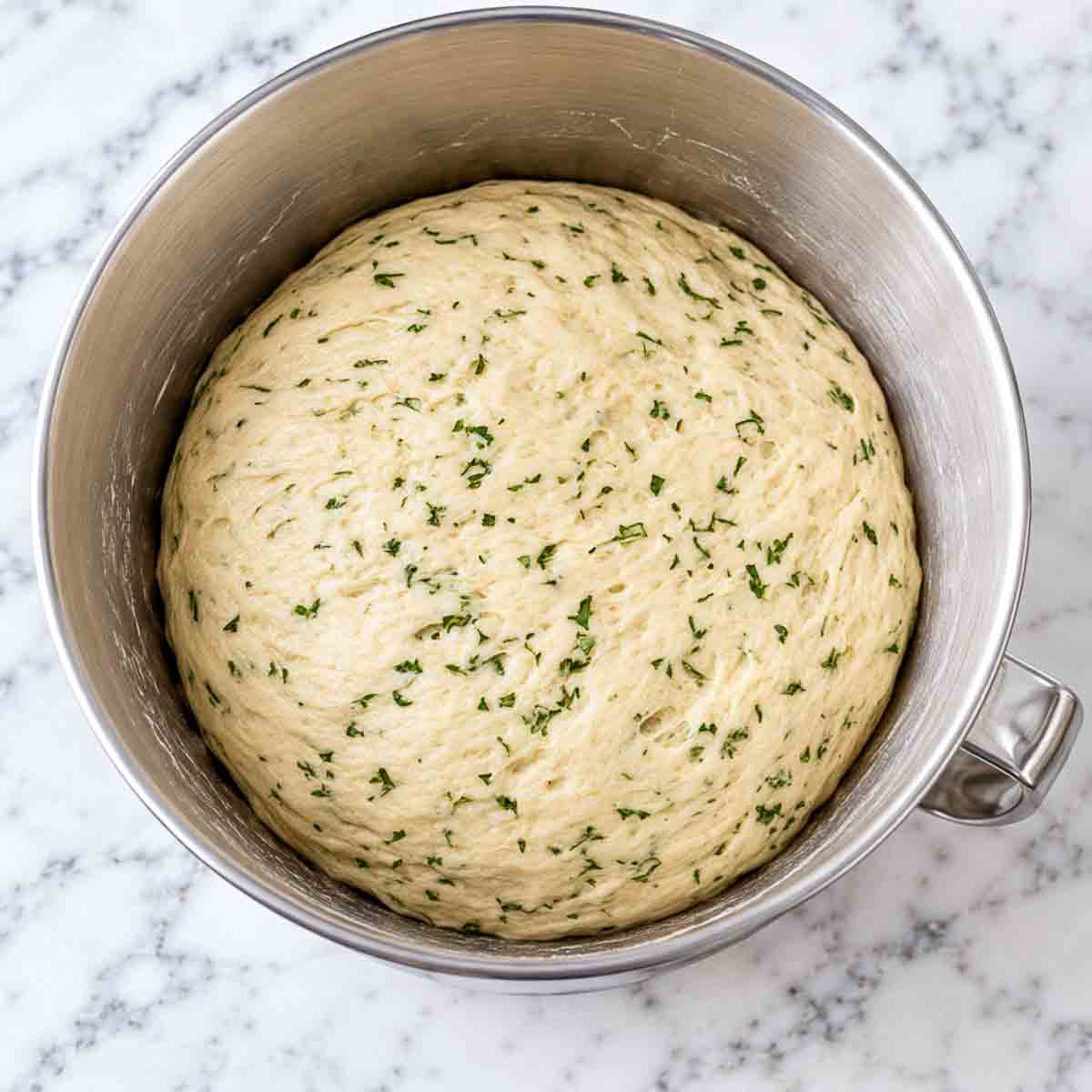
Cover and rise in a warm spot for 60-75 minutes, until doubled.
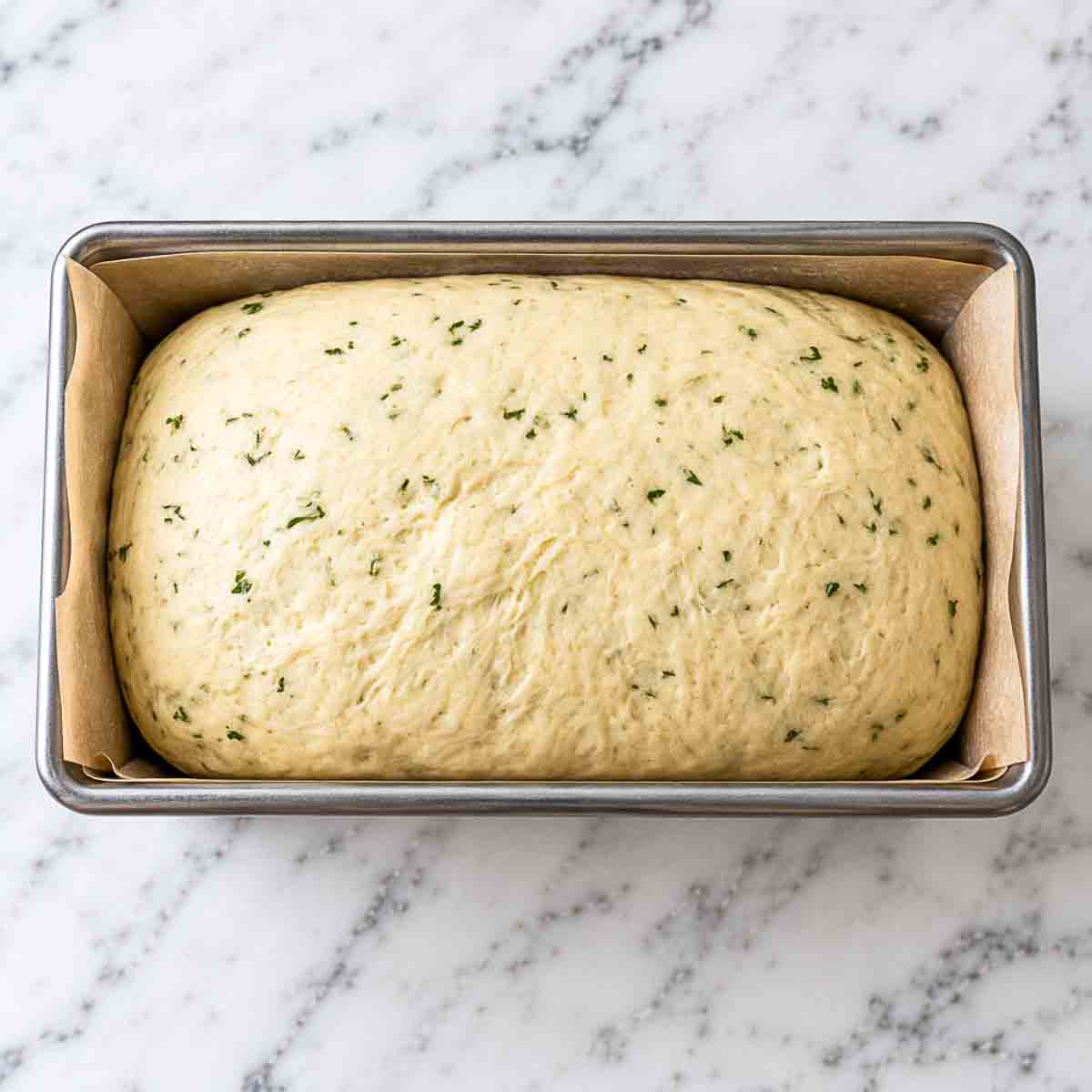
Press the dough flat, roll it into a tight log the length of the pan, and set it seam side down in a greased, parchment-lined 9x5 loaf pan. Cover and rise for 45-60 minutes.
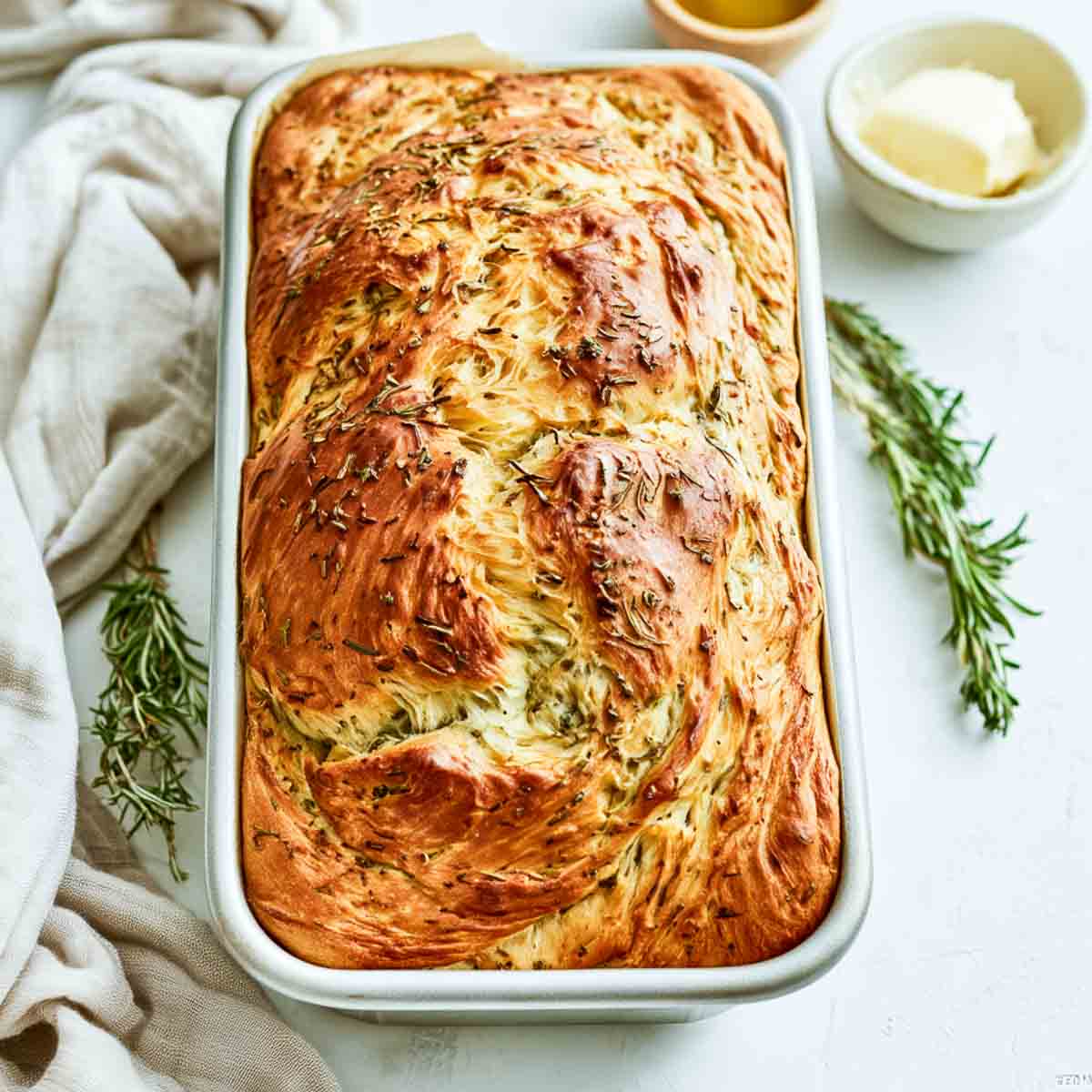
Bake at 350°F for 40-45 minutes, until deeply golden and the center reads 190-200°F, then brush with melted butter and sprinkle with flaky salt.
How Do You Know When Kefir Bread Has Finished Its Second Rise?
Press the dough gently with a fingertip. The dent should fill back in slowly. If it springs back immediately, the dough needs more time. If it collapses and does not recover, it has gone too far.
This is the lesson I carry over from sourdough, and it matters more in a rich kefir bread than in a lean dough. A pan loaf can look beautifully tall and still be underproofed, so height on its own tells you very little. What you want is dough that has expanded to fill the pan, feels noticeably lighter and more aerated than when you shaped it, and looks puffy rather than tight. Enriched doughs rise more slowly, because the fat, egg, and sugar make fermentation and gluten development sluggish, and I have learned not to go by the clock alone. With a loaf this rich I would rather give it a few extra minutes than get it into the oven early.
Cool it in the pan for 10 minutes, turn it out, and give it at least 45 minutes on a rack. Cutting an enriched loaf warm drags the crumb and leaves it gummy along the knife.
What To Serve With Kefir Herb Bread
- Roasted tomato soup, six ingredients, and it finishes in the time the second rise takes.
- White bean soup with spinach, a 30-minute pot that turns two slices into an actual dinner.
- Homemade scallion butter, spread on a warm slice while the rest of the loaf finishes cooling.
- Garlic confit, mashed straight onto the bread with a fork.
- Egg salad, the sandwich this loaf was built for.
More Kefir Recipes and Bread Recipes to Try
These are the kefir bread recipes and milk kefir recipes I come back to most.
- Kefir pizza dough uses the same tenderizing trick on a Friday night.
- Kefir banana bread is the loaf to make when the bananas turn.
- The easiest yeast bread for beginners runs on three ingredients and no kneading, an easy yeast bread and a gentler place to start than a rich dough.
- Rosemary sea salt focaccia takes the same herbs flat and dimpled instead of tall.
- Same day sourdough bread is the route to take if you already keep a starter going.
- Solved: 10 common bread baking problems covers what goes wrong across yeast bread recipes generally, from squat loaves to sunken middles.
FAQs
Kefir bread barely registers as sour. There is a mild tang, closer to buttermilk than to a fermented bread like sourdough, and the herbs and butter cover most of it. A long cold ferment would push the acidity further, but this loaf rises in under two hours, so it stays in the background. What the kefir mostly does is tenderize the crumb.
No, this one needs yeast. A no yeast bread made with kefir leans on baking soda reacting with the kefir's acidity, which is how a kefir soda bread works: mix, pour, bake, no rise at all. That produces a dense, cakey crumb, good in its own way but nothing like this. The version here uses a packet of instant yeast for a proper two-rise loaf with a light, stretchy crumb, and it needs no kefir starter and no sourdough starter to get there.
The kefir going into the bowl is. The baked loaf is not. Probiotic kefir bread is a common way to describe this sort of loaf, but live cultures die somewhere around 130°F and the center of this one finishes at 190-200°F, so none of them survive the oven. What does survive is everything those cultures made while the kefir fermented: the lactic acid that softens the gluten, and the tang that comes with it. That acidity is the entire reason the crumb turns out tender, so the kefir is still doing real work here, just not the work most people expect of it.
Yes, at about a third of the volume, so roughly 1 teaspoon each of dried rosemary and thyme and 2 teaspoons of dried parsley. Add them with the flour, the same as the fresh. The flavor is flatter and more even, and you lose the green flecks running through the crumb, which are half of what makes a homemade herb bread look homemade.
Milk kefir bread is flexible on timing. After shaping, cover the pan tightly and refrigerate for up to 12 hours instead of doing the second rise on the counter, then bring it back to room temperature for about 90 minutes before baking and judge it by the fingertip test rather than a timer. Once baked, it holds for 3 days wrapped in a towel or a paper bag at room temperature, and the crust softens after the first day, which is normal for an enriched loaf. Do not refrigerate a baked loaf, since that stales bread faster. It freezes for up to 3 months, whole or sliced, and slicing first means you can toast straight from frozen.
Once you have made homemade kefir bread once, the herbs are the easiest thing to change: swap the parsley for chives, or take the whole loaf toward sage in the fall. The method holds either way, and that is what makes this homemade herb bread worth keeping in rotation.
If you tried this Kefir Bread Recipe or any other recipe on my website, please leave a 🌟 star rating and let me know how it went in the 📝 comments below.
Equipment
- Instant-read thermometer
- Stand mixer with dough hook
Ingredients
Wet ingredients
- 1 cup plain whole milk kefir (240 ml), warmed to 100°F
- 1 large egg at room temperature
- 3 tablespoons unsalted butter melted
- 1 tablespoon honey
Dry ingredients
- 3 cups bread flour (390 g)
- 2¼ teaspoons instant yeast (one packet)
- 1½ teaspoons fine sea salt
Herbs and finishing
- 1 tablespoon fresh rosemary finely chopped
- 1 tablespoon fresh thyme leaves finely chopped
- 2 tablespoons fresh parsley finely chopped
- 1 tablespoon unsalted butter melted, for brushing
- Flaky sea salt for the top
Instructions
Mix and knead
- Warm the kefir to about 100°F. Whisk it in a large bowl with the egg, 3 tablespoons of melted butter, and the honey until smooth.
- Add the bread flour, instant yeast, fine sea salt, rosemary, thyme, and parsley. Stir until a shaggy dough forms and no dry flour remains.
- Knead for 6-8 minutes by hand, or for 5 minutes in a stand mixer on medium-low with the dough hook, until the dough is smooth and slightly tacky. If it feels stiff, add the reserved kefir 1 tablespoon at a time.
First rise
- Cover the bowl and rise in a warm spot for 60-75 minutes, until doubled.
Shape and second rise
- Grease a 9x5-inch loaf pan and line it with parchment. Turn the dough out, press it into a rough rectangle, and roll it into a tight log the length of the pan. Place it seam side down in the pan.
- Cover and rise for 45-60 minutes, until the dough crowns about 1½ inches above the rim and a gently pressed fingertip leaves a dent that fills back in slowly. Preheat the oven to 350°F partway through this rise.
Bake and finish
- Bake for 40-45 minutes, until deeply golden and an instant-read thermometer in the center reads 190-200°F. Tent loosely with foil once the top has taken its color, at about 25 minutes.
- Brush the hot loaf with the remaining 1 tablespoon of melted butter and sprinkle with flaky sea salt.
- Cool in the pan for 10 minutes, then turn out onto a wire rack and cool for at least 45 minutes before slicing.
Notes
- Kefir thickness varies. Store-bought runs from almost pourable to yogurt-thick depending on the brand, and homemade gets thicker the longer it ferments. Hold back 1-2 tablespoons either way and add it only if the dough feels stiff. Aim for soft and slightly tacky, not wet.
- Warm the kefir before mixing. Fridge-cold kefir stalls the first rise. Aim for about 100°F, barely warm to the touch.
- Judge the second rise by feel, not height. A pan loaf can look tall and still be underproofed. The fingertip dent should fill in slowly; immediate springback means it needs longer.
- Bread flour matters here. Kefir's acidity softens gluten, so the extra protein holds the crown. All-purpose gives a shorter, tighter loaf.
- Dried herbs: use about one third the volume, added with the flour.
- Make ahead: after shaping, refrigerate the covered pan for up to 12 hours, then bring to room temperature for about 90 minutes before baking.
- Storage: 3 days at room temperature, wrapped in a towel or paper bag. Do not refrigerate. Freezes for up to 3 months, whole or sliced.