
Soft Sourdough Sandwich Bread for Lunchboxes: No Yeast, No Stand Mixer
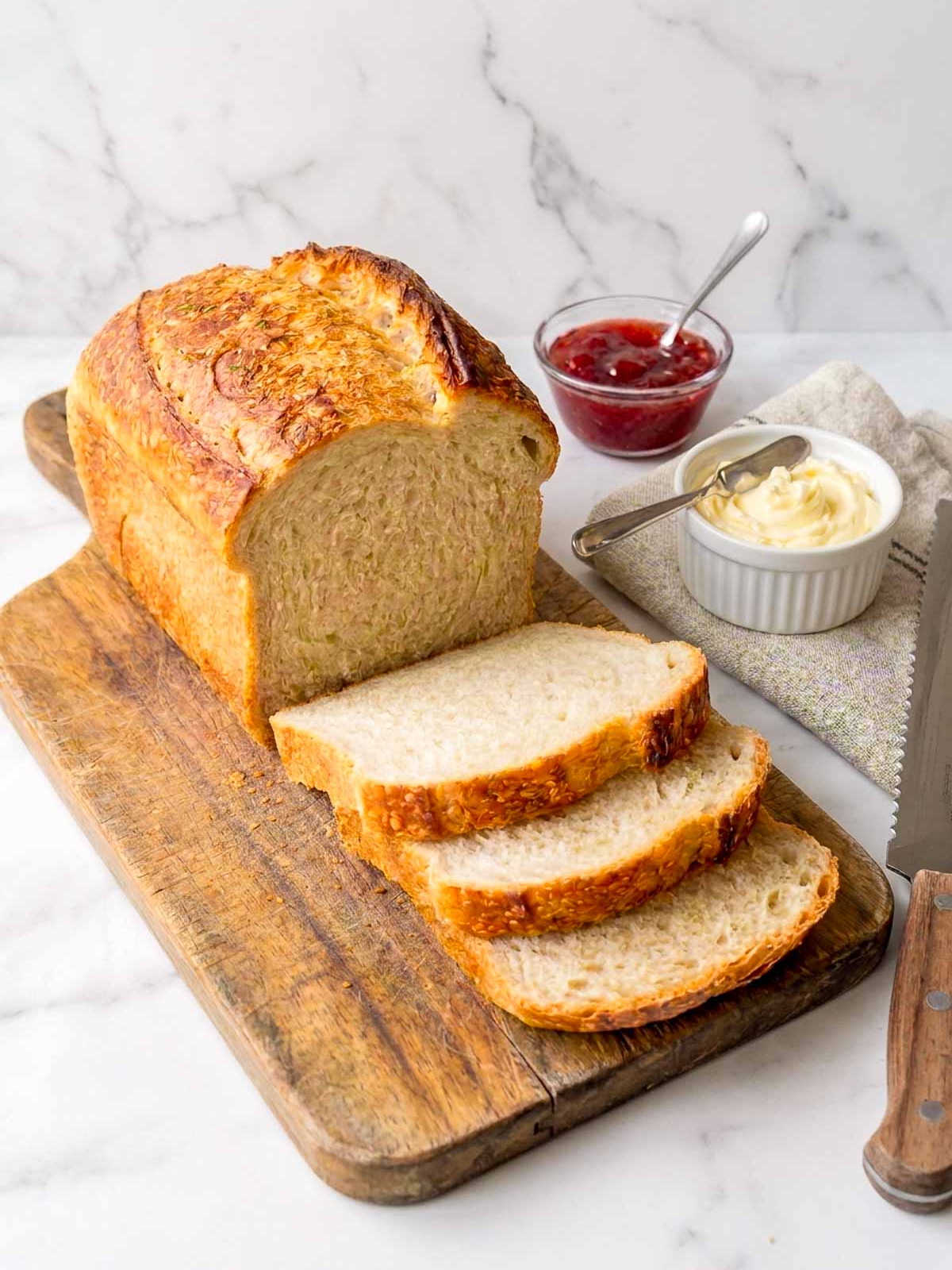
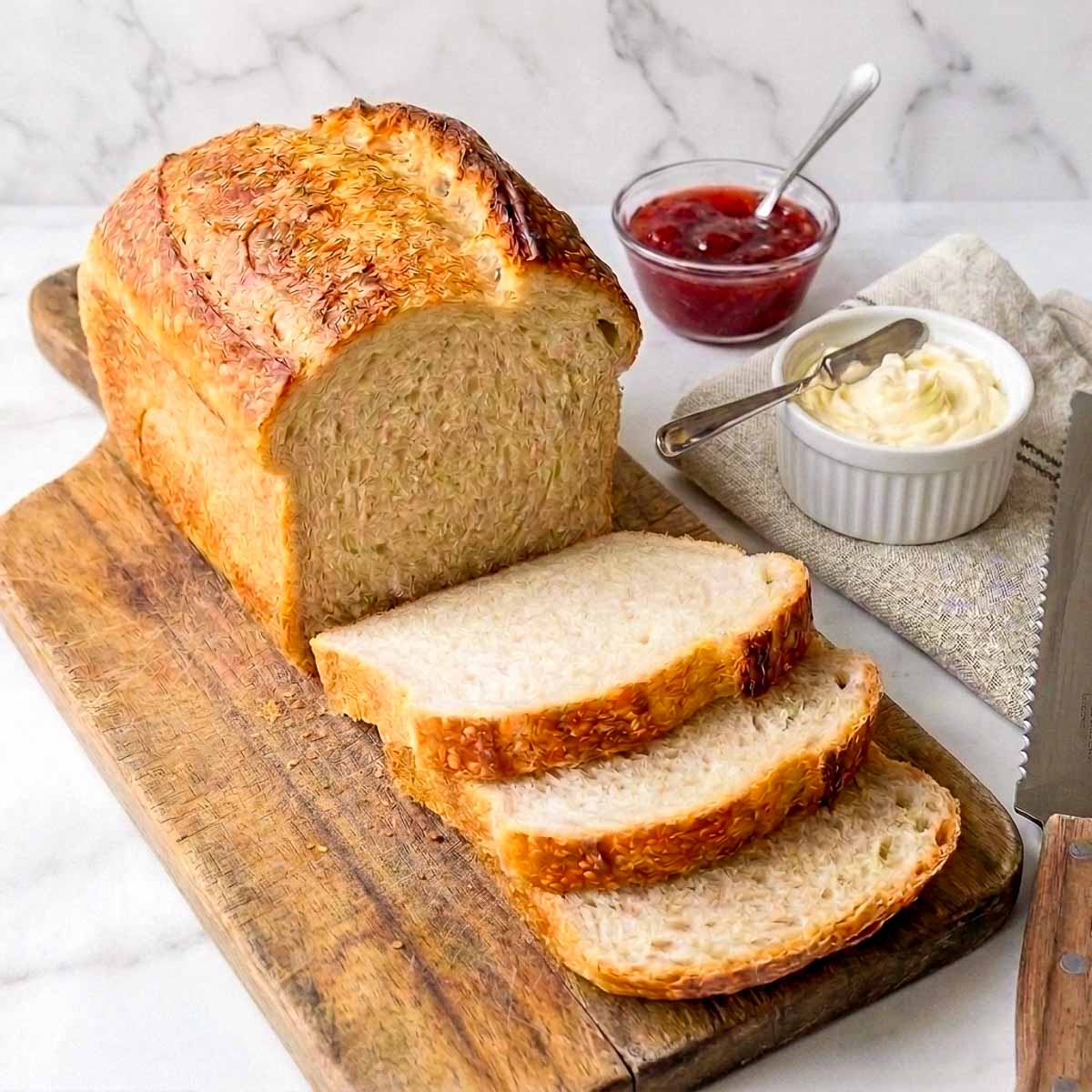
Sourdough sandwich bread is a loaf-pan bread leavened entirely by active sourdough starter, enriched with milk and butter so the crumb stays soft and sliceable instead of chewy and open like an artisan boule. There is no commercial yeast in it and no stand mixer required: stretch and folds do the work kneading would.
Disclosure: This post may contain affiliate links. This means I get a small commission if you decide to make a purchase through my links at no extra cost to you.
One batch makes two 9-inch loaves, which is the whole point, since one gets sliced for the week and the other goes straight into the freezer. Mix in the morning, bulk rise 3 to 4 hours, cold proof in the fridge overnight, then bake at 360°F for 25 to 30 minutes the next day. Active time is around an hour, and the rest is waiting. It keeps 2 to 3 days wrapped at room temperature and freezes for up to 3 months.
Jump to:
- Why This Recipe Works
- How Long Does Sourdough Sandwich Bread Take?
- Why You'll Love This Sourdough Sandwich Bread
- Key Ingredients
- How To Make Sourdough Sandwich Bread
- Recipe Testing Notes
- Substitutions and Variations
- What To Serve With Sourdough Sandwich Bread
- Sourdough Sandwich Bread FAQs
- Made This Recipe?
- Sourdough Sandwich Bread

Why This Recipe Works
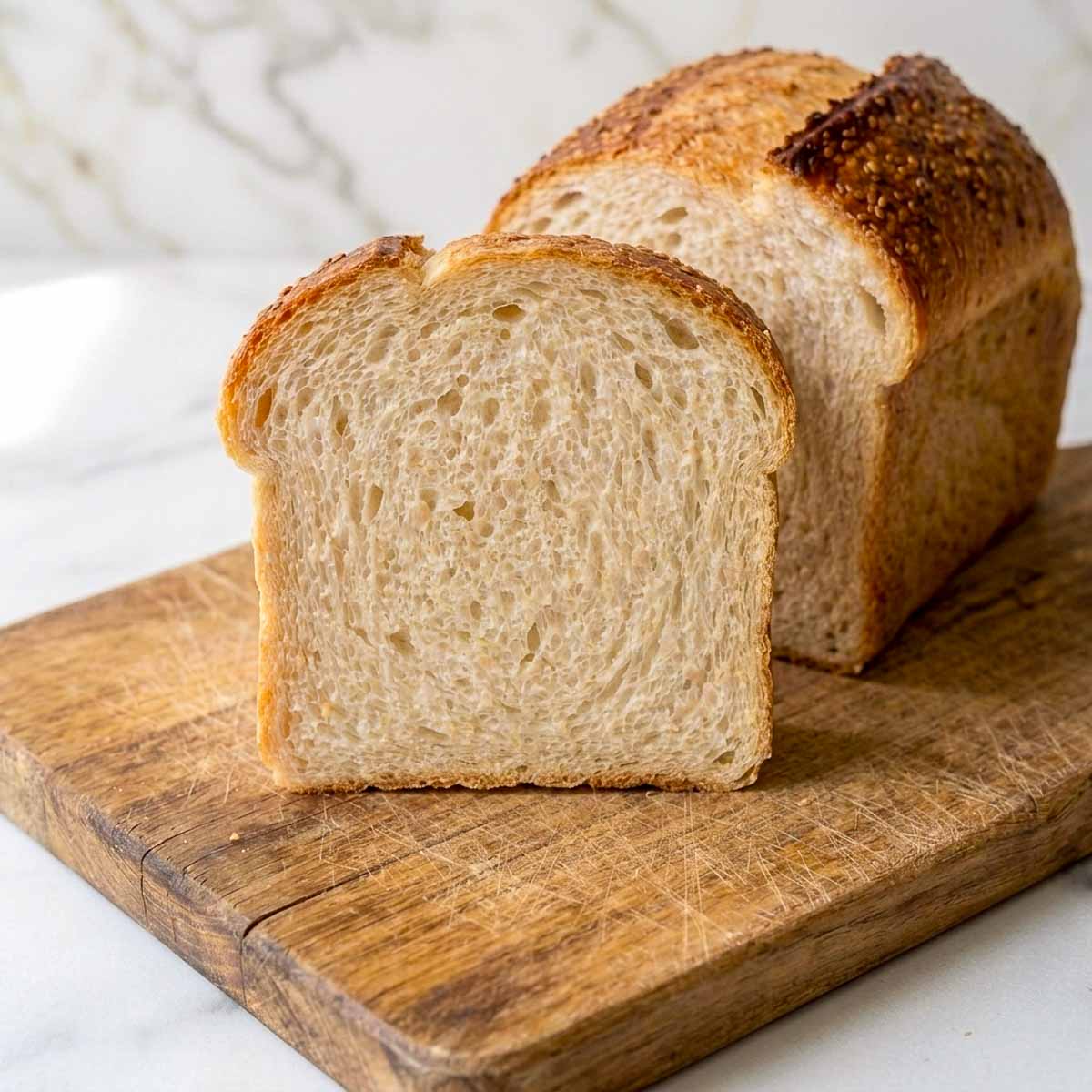
The milk and butter are what separate this from a standard soft sourdough sandwich bread recipe made with water alone. Fat coats the gluten strands and shortens them, which gives you a tight, tender crumb that takes a knife cleanly and does not tear when you spread cold butter on it. It is also what produces a super soft crust rather than the crackling one you want on an artisan loaf.
Low-protein all-purpose flour matters for the same reason. Bread flour builds more gluten and makes this loaf chewier than you want in a sandwich. The overnight cold proof does the flavor work while you sleep, and it develops depth without pushing the loaf sour, which matters if you are feeding people who say they do not like sourdough.
How Long Does Sourdough Sandwich Bread Take?
Plan for two days, though almost none of it is hands-on. Mixing and the first rest take about 45 minutes. The stretch and folds run over the next hour and a half to two hours, in sets 30 minutes apart that take about 30 seconds each. Bulk fermentation is 3 to 4 hours after that, depending on how warm your kitchen is, then shaping takes 15 minutes. The loaves go into the fridge overnight, come back to room temperature for 1 to 2 hours the next morning, and bake in 25 to 30 minutes.
If two days does not suit you, this works as a same-day sourdough sandwich bread instead: skip the fridge and proof the shaped loaves in a warm spot for 1 to 2 hours before baking.
Why You'll Love This Sourdough Sandwich Bread
- One batch, two loaves. Homemade sourdough sandwich bread is a time investment, so slice one and freeze the other.
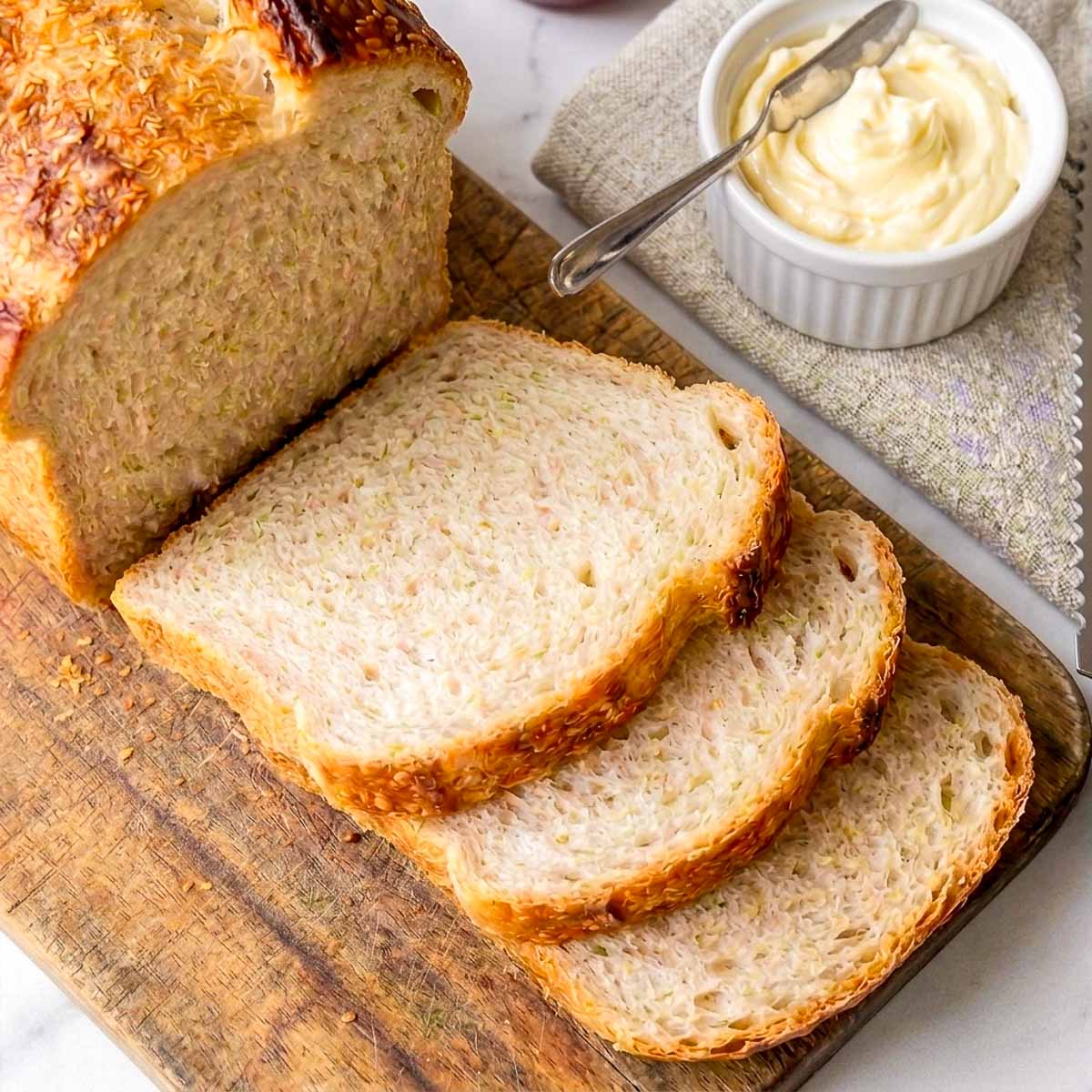
- It slices thin without crumbling, which is the difference between bread that works in a lunchbox and bread that collapses the moment you spread something on it.
- No commercial yeast and no stand mixer.
- The crumb is soft and fluffy sourdough sandwich bread territory, not open and holey, so nothing falls through.
- The overnight step means you bake in the morning, when the oven is free.
Key Ingredients
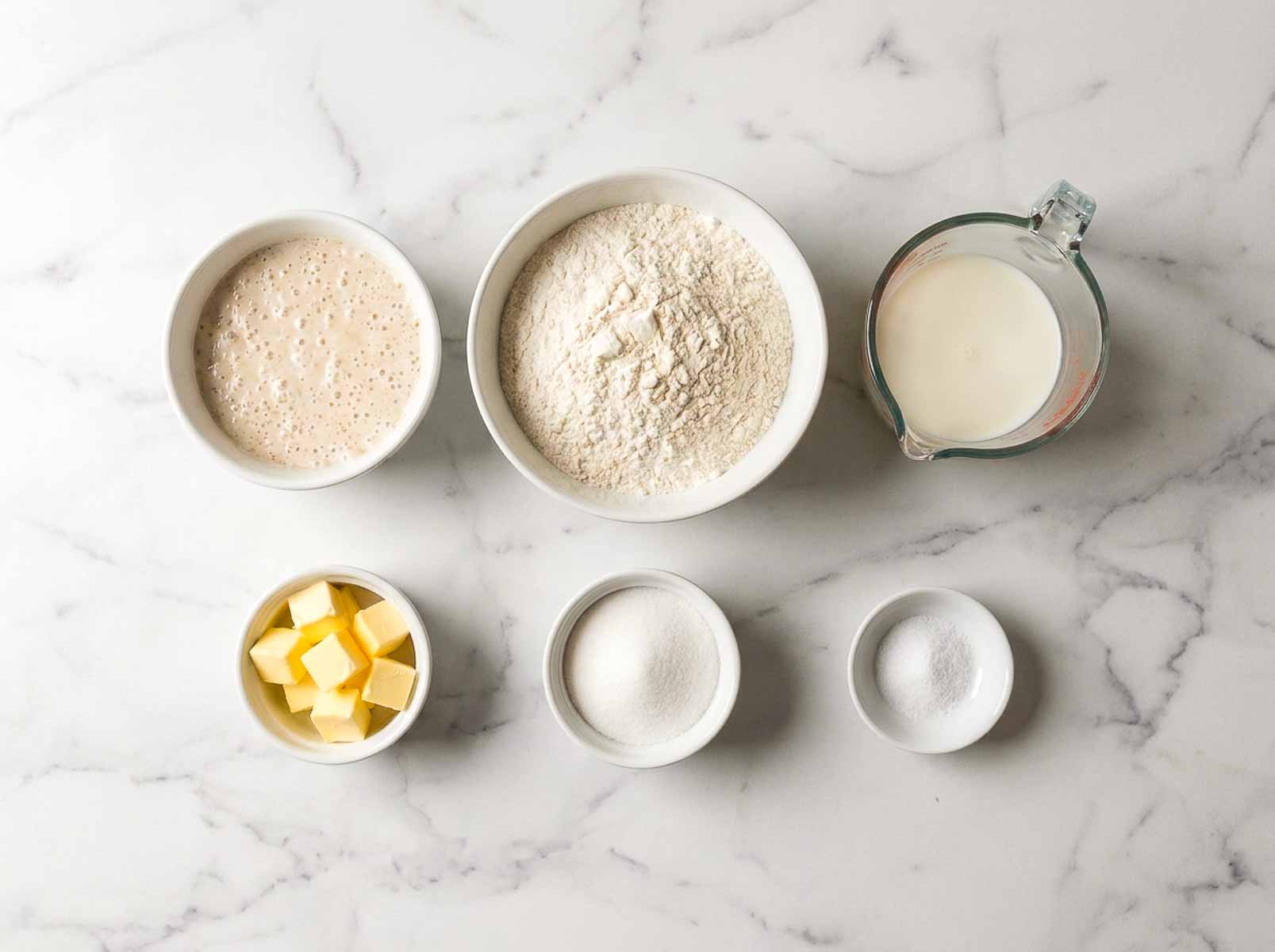
- Active sourdough starter. This is the only leavening in the loaf, so it has to be genuinely active: risen, domed, visibly bubbly, and roughly doubled since its last feed. A starter that has collapsed back down has already spent most of its rising power. If yours needs work first, start with how to make a sourdough starter and build it up before you commit a full batch of flour. Making sandwich bread with sourdough starter in this quantity is what lets the dough rise in a few hours rather than overnight, so it is worth keeping your starter fed and active on a regular schedule before a bake day.
- All-purpose flour. Low protein is deliberate and gives the softer, shorter crumb a sandwich loaf needs.
- Whole milk. Milk fat and milk solids soften the crumb and help the crust brown to a deeper gold. Warm it only to lukewarm, around 90 to 100°F: warm enough to melt the butter into it, cool enough that it will not damage the starter.
- Butter. Melted into the warm milk rather than worked in separately, which keeps the method to one bowl and is a large part of why this loaf stays soft for days.
- Loaf pans. Two 9-inch pans, lined with parchment. This is a sourdough bread recipe for loaf pans, not a Dutch oven bake, and the pan is what gives the loaf its square-shouldered sandwich shape.
How To Make Sourdough Sandwich Bread
Step 1: Mix the dough
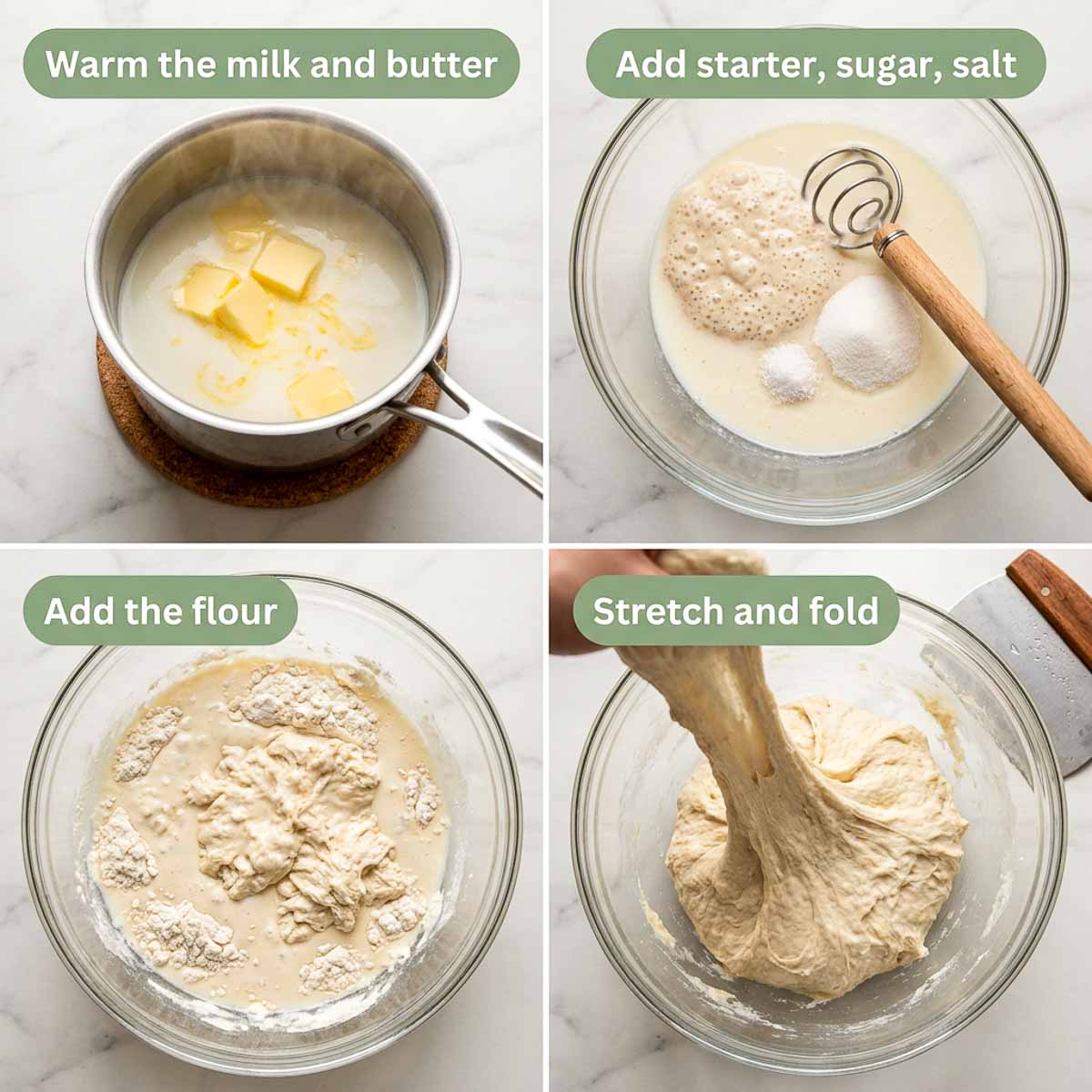
- Warm the milk and butter together in a small saucepan until the butter has melted and the milk is just lukewarm, around 90 to 100°F. It should feel neutral against your wrist, not hot. Pour it into a large bowl and add the active starter, sugar, and salt, whisking until the starter is dispersed and no longer sitting in a lump.
- Add the flour and mix until no dry flour remains, then knead gently in the bowl for 4 to 5 minutes. The dough will be soft and slightly tacky. Add a little more flour only if it is sticking to everything rather than just clinging to your fingers. Cover and rest for 30 minutes.
Step 2: Stretch, fold, and bulk rise
- With a wet hand, reach down the side of the bowl, lift a section of dough until it stretches without tearing, and fold it over the center. Turn the bowl a quarter turn and repeat until you have worked all the way around, then flip the dough over and round it up. That is one set. Do 3 to 4 sets, 30 minutes apart. By the final set the dough should lift in one piece and pull back when you let go.
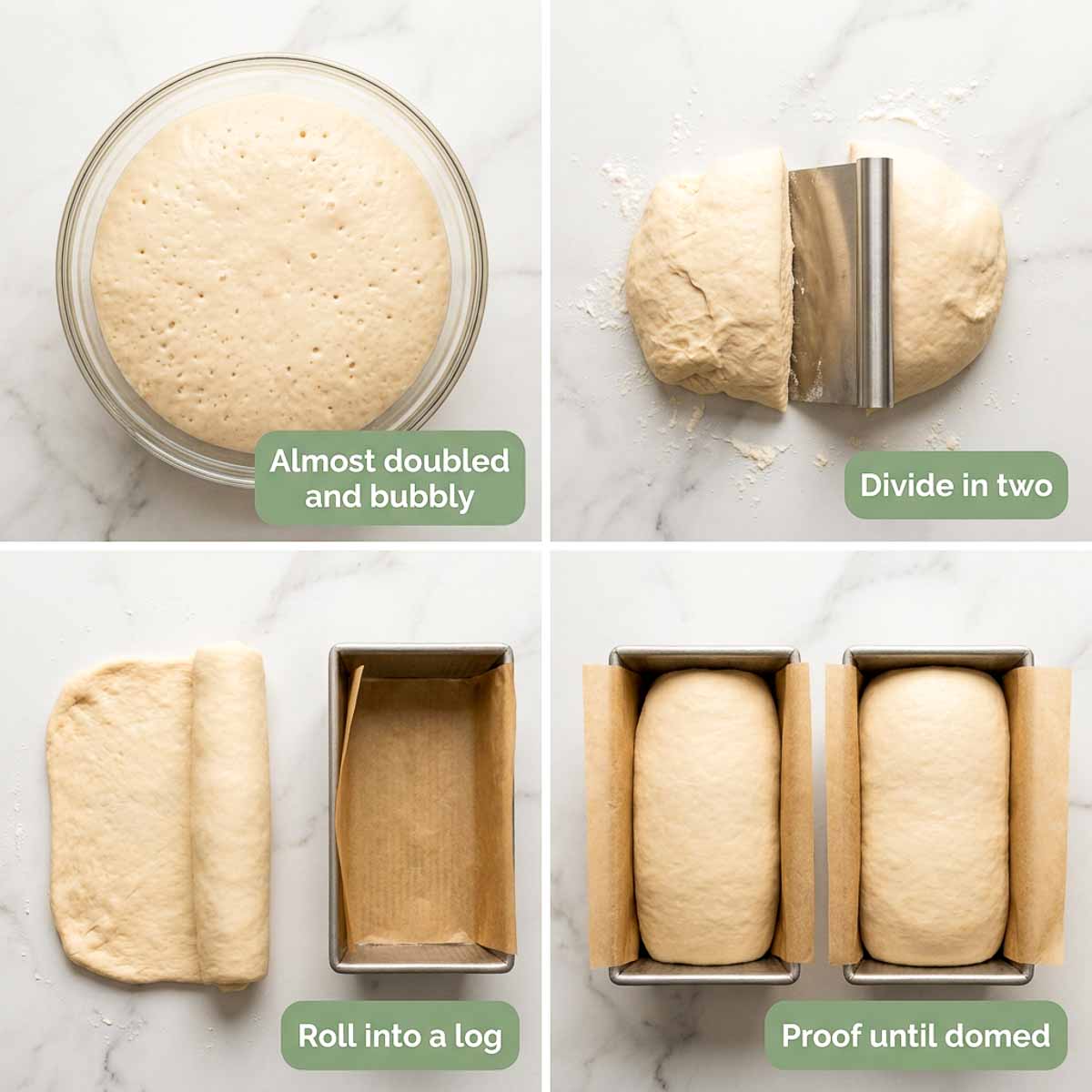
- Cover and bulk rise 3 to 4 hours, until almost doubled with a domed, bubbled surface. Judge by the dough, not the clock: a 78°F kitchen gets there in 3 hours, a 68°F kitchen may take 5.
Step 3: Shape and cold proof
- Line two 9-inch loaf pans with parchment. Turn the dough onto a lightly floured surface and divide it in two with a bench scraper. Pat each half into a rough 9-inch rectangle, handling it gently so you do not press all the gas out, then roll it into a tight log and pinch the seam closed. The tension you build across the surface is what makes the loaf rise upward rather than spread sideways.
- Place each log seam side down in a pan, cover, and refrigerate overnight.
Step 4: Baking sourdough bread in loaf pans
- Take the pans out of the fridge and let them sit in a warm spot for 1 to 2 hours, until the dough has come back to room temperature and domed just above the rim. Preheat the oven to 360°F for 15 minutes.
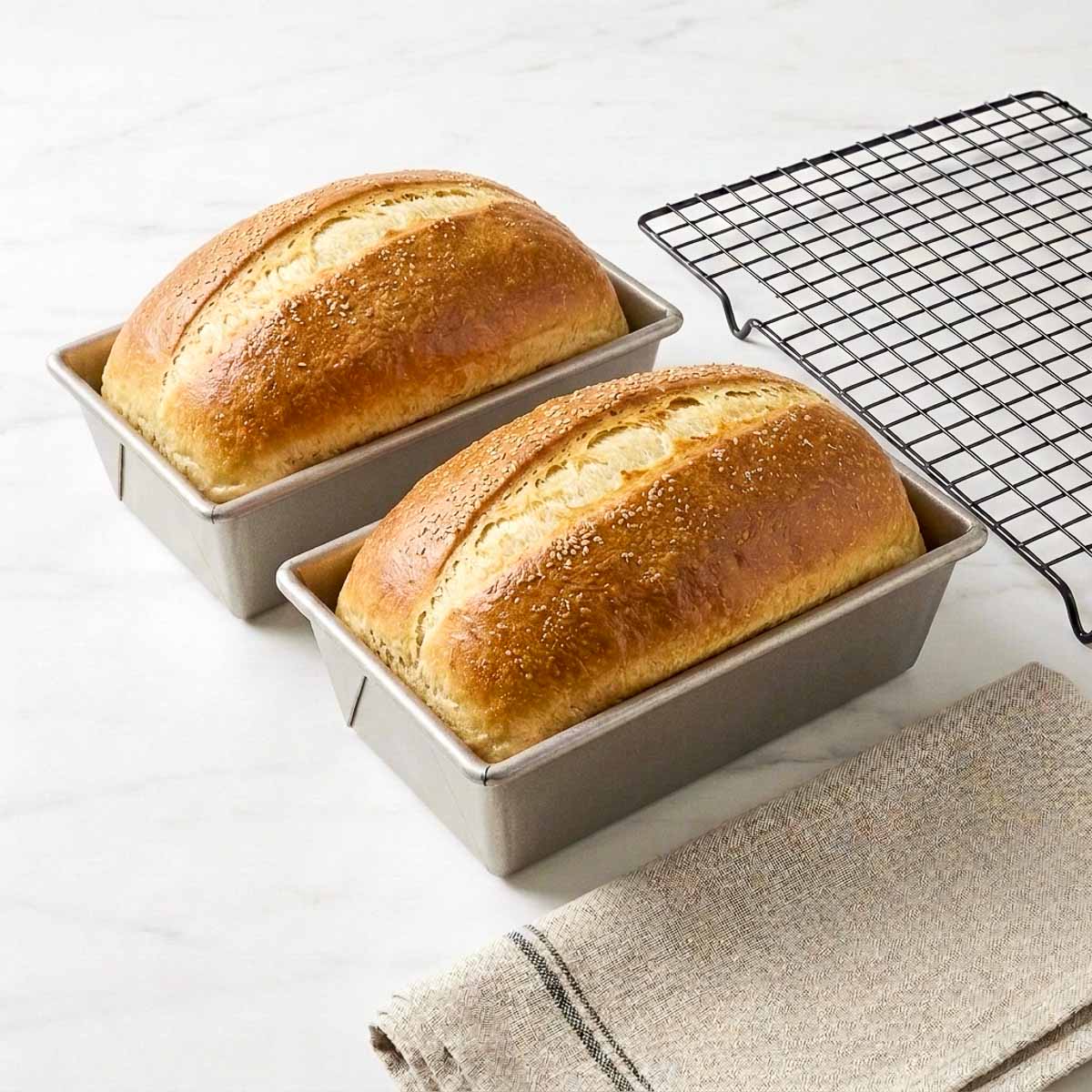
- Score the dough down the center lengthwise, about a quarter inch deep. Bake for 25 to 30 minutes, until the tops are deep golden. The most reliable test is internal temperature: 190 to 200°F in the center means it is done. Cool in the pans for 10 minutes, then turn out onto a wire rack.
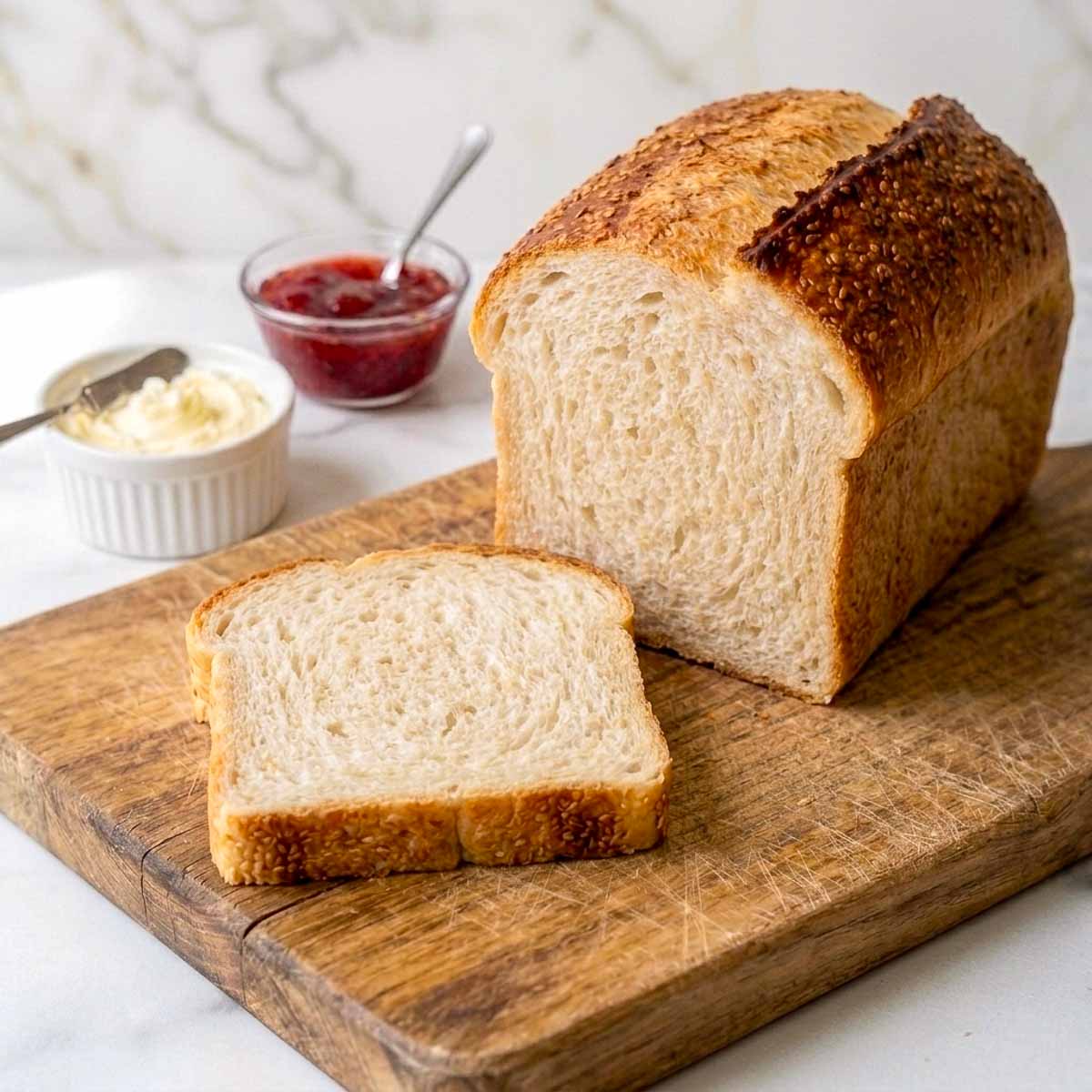
- Let the loaves cool completely before slicing. Cutting into warm sourdough compresses the crumb and makes a good loaf seem gummy, and it is the most common reason a bake gets written off as a failure when it was actually fine.
Recipe Testing Notes
On one of my early bakes, I did not give the dough enough time to bulk ferment, and the finished loaf turned out dense instead of soft and fluffy. Letting the dough ferment longer fixed the problem. I now wait for the dough to show clear signs that it is ready rather than shaping it based only on the suggested fermentation time.
I do not judge the bulk rise by volume alone. When it is ready, the dough is almost doubled, has visible bubbles across the surface, and smells slightly sweet. I look for all three cues before moving on to shaping, especially since the exact fermentation time can change depending on the temperature of the kitchen. This loaf is built for soft slices and sandwiches rather than a crackly crust. When you want the opposite, a same-day sourdough bâtard gives you the deep crust and open crumb on a schedule that still fits in one day.
Substitutions and Variations
- Light milk. I have made this sourdough sandwich bread with light milk instead of whole milk, and it worked well. The loaf was still soft, but whole milk gave me a softer and fluffier crumb. I have not tested this recipe with non-dairy milk.
- Whole wheat. Swap up to a third of the all-purpose for whole wheat. Going further, toward a 100% whole wheat sourdough sandwich bread, makes the loaf noticeably denser and needs extra milk, since whole wheat absorbs more liquid.
- Honey. For a sourdough sandwich bread with honey, use honey in place of the sugar. It gives a slightly softer crust and a faintly floral note. For a sweeter loaf from the same starter, try this lemon blueberry sourdough bread.
- Cinnamon swirl. Roll cinnamon sugar into the rectangle at the shaping stage, before you form the log. Keep the layer thin, or it will separate and leave a gap through the middle.
- Herb loaf. Chopped rosemary or thyme worked in at shaping.
For more directions to take a basic dough, see 10 unique sourdough bread variations.
What To Serve With Sourdough Sandwich Bread
Sandwiches. This is what the loaf is built for. It holds a wet filling without going soggy, which makes it a good match for a chickpea salad sandwich or a stacked chicken club sandwich.
The tight crumb makes it a good match for wetter fillings, which is why I use it for a paneer sandwich when the green chutney is on the loose side.
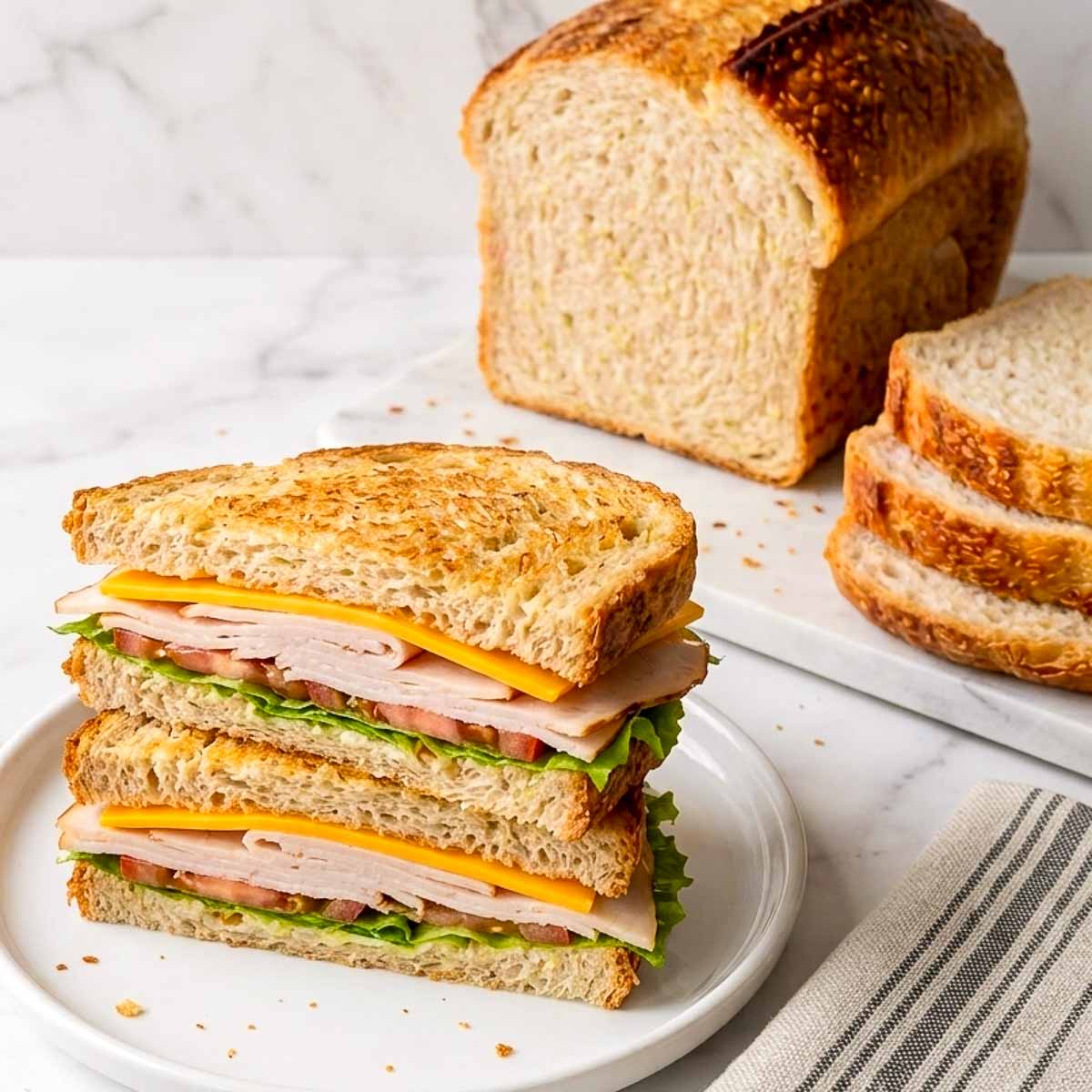
Toast. The tight crumb toasts evenly rather than burning at the edges. For something more substantial, try avocado egg salad toast.
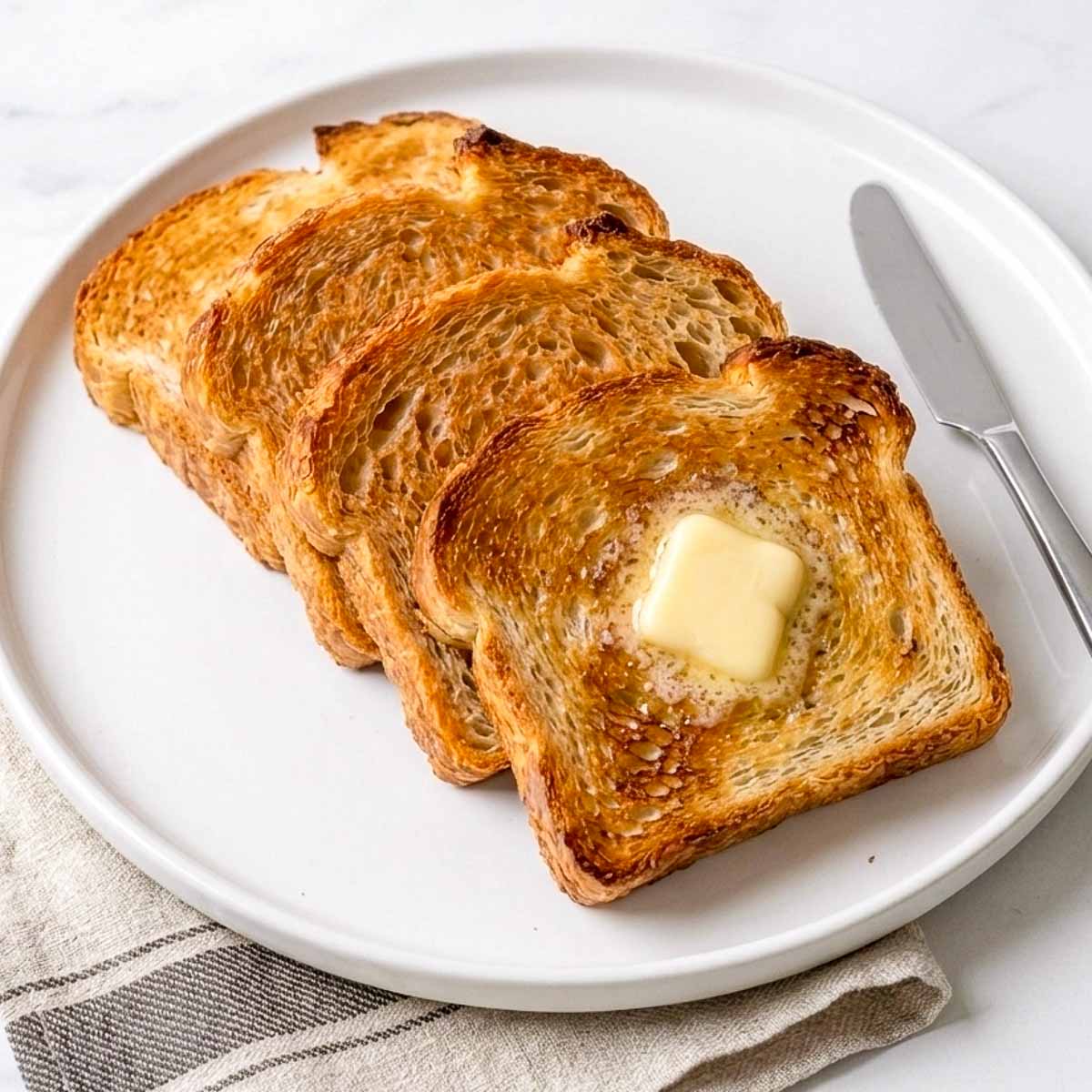
Alongside soup. A thick slice next to roasted tomato soup is the reason to keep the second loaf in the freezer.
In lunchboxes. It survives being packed at 7 am and eaten at noon without turning to paste. If you are building out the rest of the box, 50 school lunch ideas for kids covers everything that goes around the sandwich.
French toast. Day-three slices soak the custard better than fresh ones do.
Sourdough Sandwich Bread FAQs
No. This is sourdough sandwich bread with no yeast added: the active starter is the only leavening. That is why the timeline runs in hours rather than minutes, and why the starter's condition matters so much.
You can, and it is a different recipe. Adding a teaspoon of instant yeast alongside the starter cuts the bulk rise to about an hour and gives you a more predictable loaf, but you lose most of the tang and the slow fermentation that comes with it. This recipe is written for starter alone.
Not for this recipe. Sourdough discard sandwich bread needs commercial yeast or baking soda to lift it, because discard has no rising power left. Swapping it in here gives you a dense brick. The discard left over from a week of baking is enough for a batch of sourdough discard crackers.
Wait until it reliably doubles within 4 to 6 hours of a feed, two or three times running. A starter that only manages a modest rise will technically leaven this loaf but takes far longer and gives a tighter crumb.
Yes. Skip the fridge and proof the shaped loaves in a warm spot for 1 to 2 hours, until domed above the pan rim, then bake as written. Do not skip the second proof entirely. The overnight version has more flavor; the same-day version is faster.
Almost always under-fermentation: either the bulk rise was cut short, or the starter was not active enough to begin with. Add an hour if your kitchen is cool. Slicing while still warm also makes a fine loaf seem dense.
No. Stretch and folds replace kneading entirely. If you would rather use a mixer, combine on low with the dough hook, run 4 to 5 minutes on medium, then carry on from the first rest.
Yes, halve everything straight down. Timings do not change, since fermentation depends on temperature and starter activity rather than batch size.
Yes. A sourdough sandwich bread Pullman pan bake gives perfectly square slices. Bake it lidded for a flat top or unlidded for a domed one. Otherwise, two 9-inch pans.
Cool completely, then wrap in a clean tea towel and keep it in a bread box or paper bag at room temperature for 2 to 3 days. Do not refrigerate, which speeds up staling.
Yes, and this is why the recipe makes two. Freeze the whole cooled loaf in a freezer bag, or slice it first so you can pull out two at a time. Keeps 3 months. Thaw at room temperature or toast slices straight from frozen.
Made This Recipe?
Leave a star rating and a comment below to tell me how your loaf turned out, especially how long your bulk rise took, since kitchen temperature changes it so much. If you are still building your starter, begin with how to make a sourdough starter, and save this one to Pinterest for the next bake.
Equipment
- 9-inch loaf pans (set of two)
- Dough whisk
- Cooling rack
- Knife
- Food thermometer
Ingredients
- 450 g active sourdough starter about 2 cups
- 700 g all purpose flour about 5¾ cups
- 480 ml whole milk 2 cups
- 60 g unsalted butter 4 tablespoons
- 3 tablespoons sugar
- 1 teaspoon salt
Instructions
Mix the dough
- Warm the milk and butter in a small saucepan until the butter melts and the milk is lukewarm, 90 to 100°F. Do not overheat it.
- Pour into a large bowl and whisk in the active sourdough starter, sugar and salt until no lumps of starter remain.
- Add the flour and mix until no dry flour is left. Knead gently in the bowl for 4 to 5 minutes, adding 1 to 2 tablespoons more flour only if needed.
- Cover and rest at room temperature for 30 minutes.
Bulk fermentation
- With a wet hand, stretch a section of dough up and fold it over the center. Turn the bowl and repeat all the way around, then flip the dough and round it up. That is one set.
- Repeat for 3 to 4 sets total, 30 minutes apart. The dough should feel noticeably stronger by the final set.
- Cover and bulk rise 3 to 4 hours, until almost doubled with a bubbled surface. Time depends on kitchen temperature.
Shape and cold proof
- Line two 9-inch loaf pans with parchment. Turn the dough onto a lightly floured surface and divide in two.
- Pat each half into a 9-inch rectangle without pressing out the gas, roll into a tight log, and pinch the seam.
- Place seam side down in the pans, cover, and refrigerate overnight for cold fermentation.
Bake
- Remove from the fridge and let sit in a warm spot for 1 to 2 hours, until at room temperature and domed above the pan rim.
- Preheat the oven to 360°F for 15 minutes.
- Score the dough vertically. Bake for 25 to 30 minutes, until deep golden and 190 to 200°F in the center.
- Cool in the pans for 10 minutes, turn out onto a wire rack, and cool completely before slicing.
Notes
- Lukewarm milk only. Hot milk will damage the starter. It should feel neutral against your wrist.
- Active starter is non-negotiable. It should be domed and bubbly, roughly doubled since its last feed. Discard will not work here.
- Do not skip the second proof, even if you are baking the same day. Shaped loaves need 1 to 2 hours in a warm spot before they go in the oven.
- Roll the log tight. Surface tension is what makes the loaf rise up rather than spread sideways.
- Cool completely before slicing. Warm sourdough compresses under the knife and reads as gummy.
- Freezing: slice before freezing so you can toast straight from frozen. Keeps 3 months.