
Lemon Blueberry Sourdough Bread: Golden Crust, Soft Crumb, and Juicy Berry Pockets
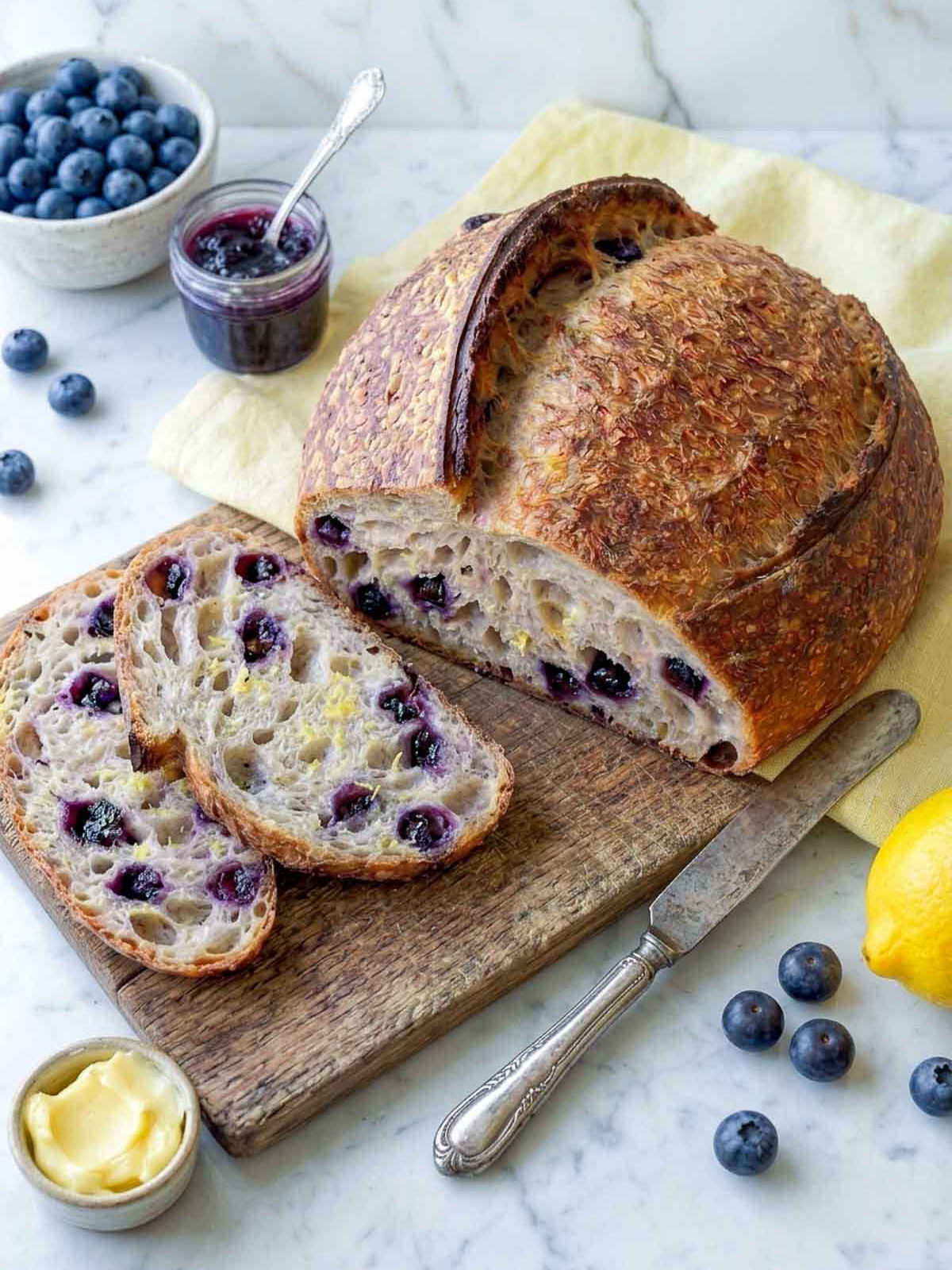
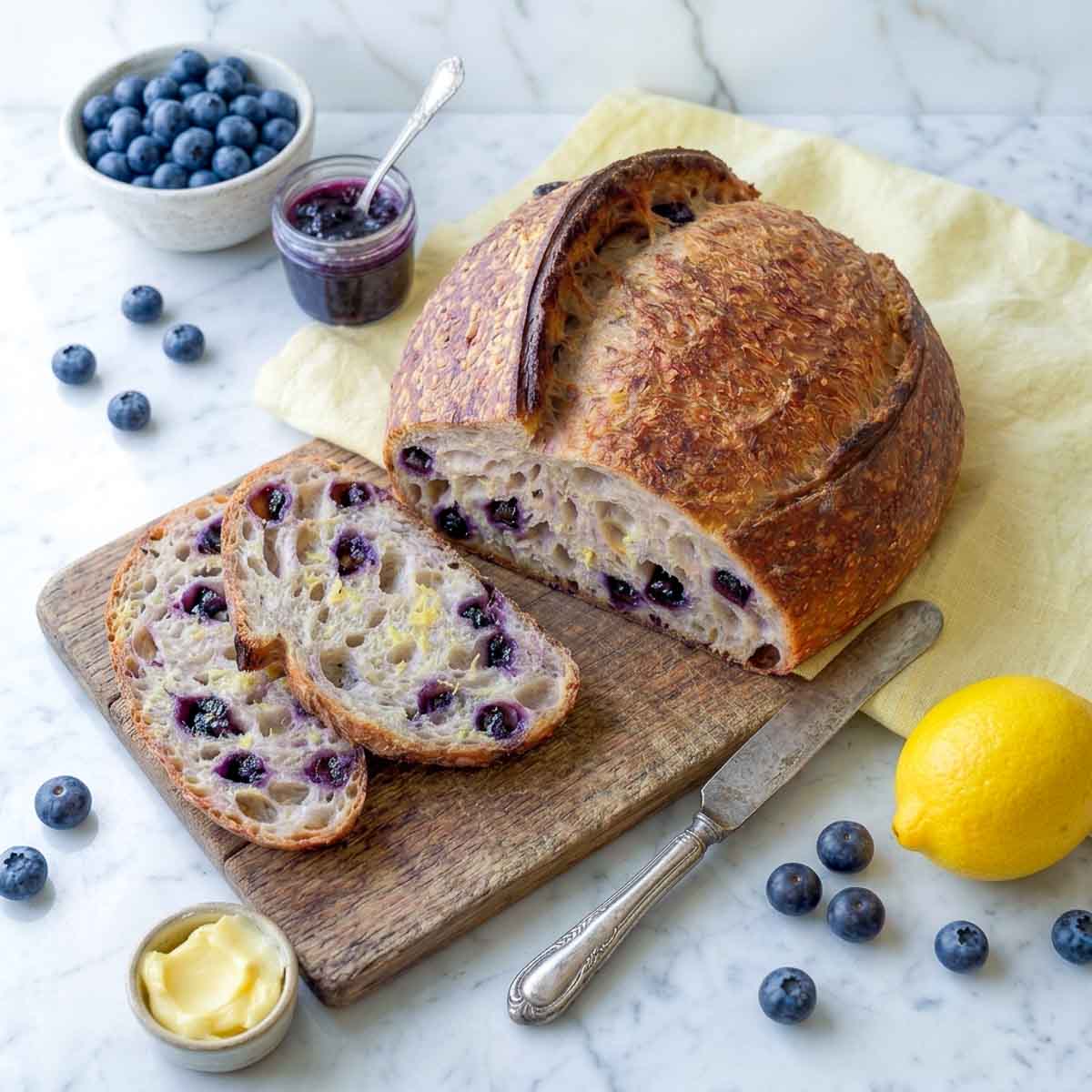
Lemon blueberry sourdough bread is a naturally leavened loaf made with an active starter, fresh blueberries, and the zest of two lemons folded in during bulk fermentation. It bakes in a preheated Dutch oven at 450°F and gives you an open crumb with whole berries suspended through it and citrus running under the sourdough tang.
Disclosure: This post may contain affiliate links. This means I get a small commission if you decide to make a purchase through my links at no extra cost to you.
Active time is about an hour spread across a morning of stretch and folds. The shaped loaf then cold ferments overnight in the fridge and bakes the next day, so the long part happens while you sleep.
There is no yeast, no sugar in the dough, and no glaze, which keeps this a lightly fruity breakfast loaf rather than a dessert. Two things decide whether this blueberry lemon sourdough bread works: an active, well-fed starter, and being willing to let the fruit misbehave. Whole blueberries burst, streak the dough purple, and pop out during shaping. None of that hurts the finished loaf.
Jump to:

Why You'll Love This Recipe
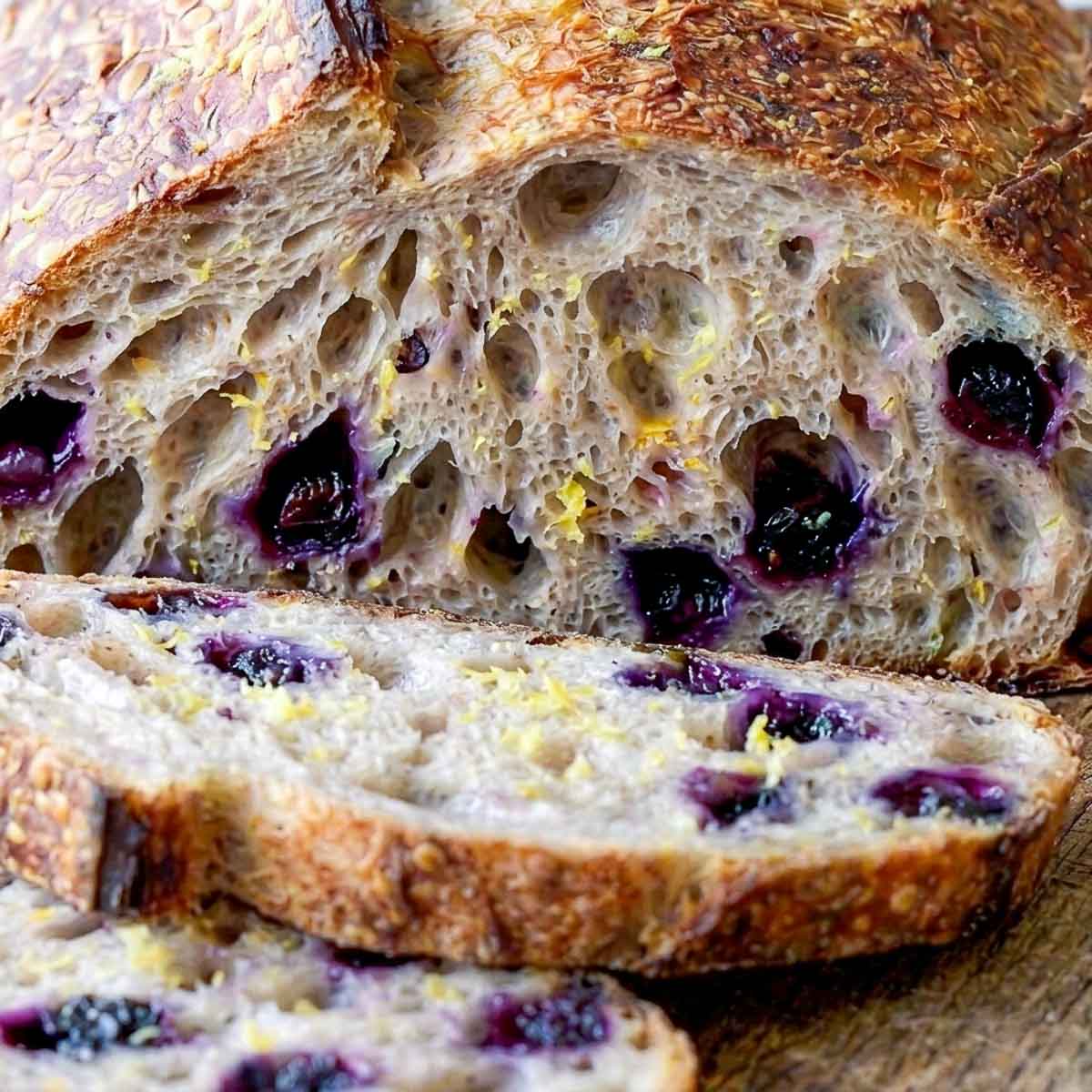
- Fresh berries and real lemon zest, not freeze-dried fruit or extract.
- No sugar in the dough, so the sweetness comes from the fruit alone.
- One loaf, one Dutch oven, no special pan.
- The overnight rise means the bake happens on your schedule, not the dough's.
- It slices clean once cooled, which makes this sourdough blueberry lemon loaf a genuinely good toasting bread all week.
Key Ingredients
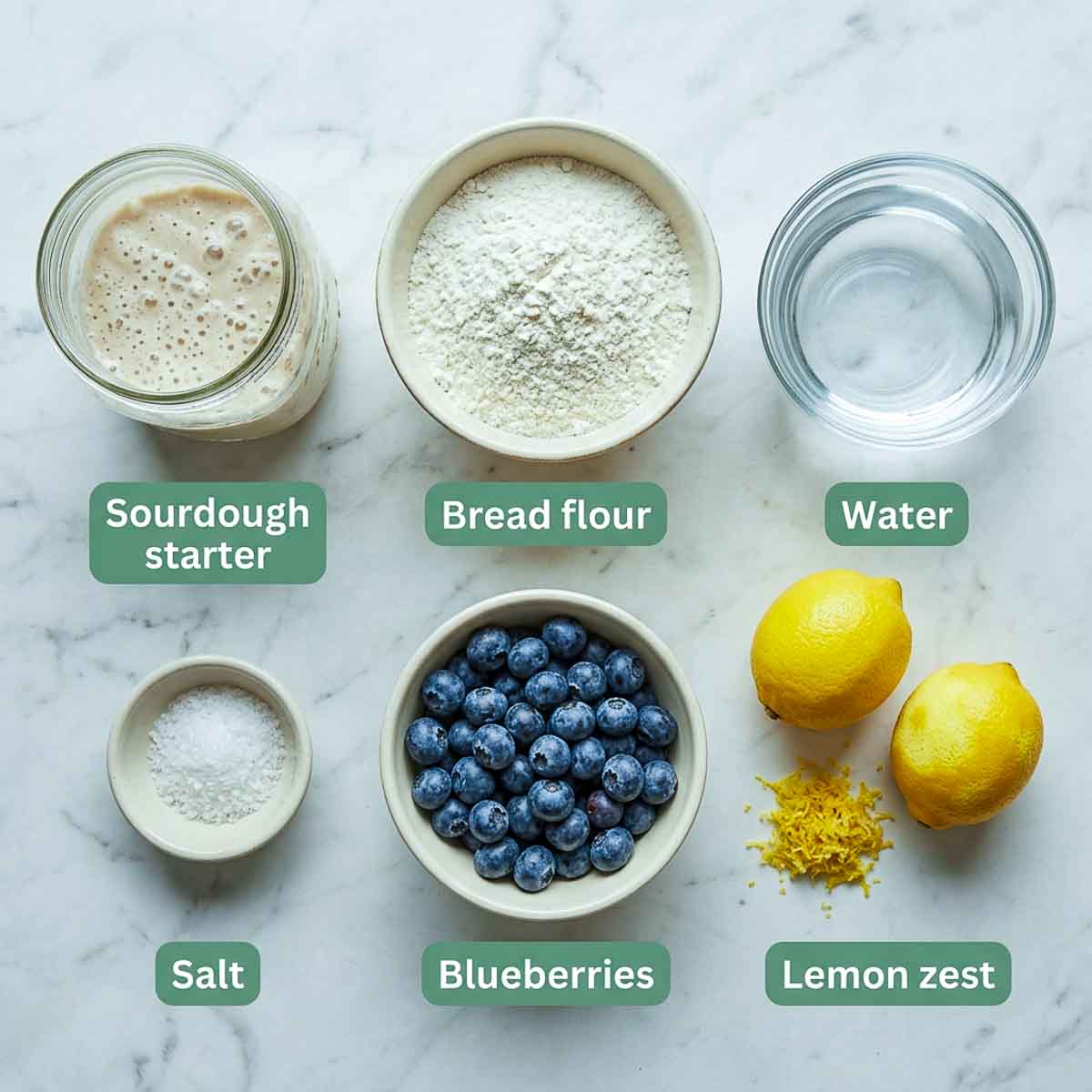
- Sourdough starter. Active and bubbly, not straight from the fridge. Feed it 1:1:1 the night before so it is at peak when you mix. A sluggish starter is the most common reason a blueberry sourdough bread comes out dense. If you do not have one going, how to make a sourdough starter builds one from scratch.
- Bread flour. The higher protein matters more here than in a plain loaf, because the berries release moisture and physically interrupt the gluten network as they fold in.
- Fresh blueberries. Whole, not chopped. They burst under the folds and bleed purple through the crumb.
- Lemon zest. The oils live in the zest, which is where the citrus flavor comes from. Two lemons is not too much.
How To Make Lemon Blueberry Sourdough Bread
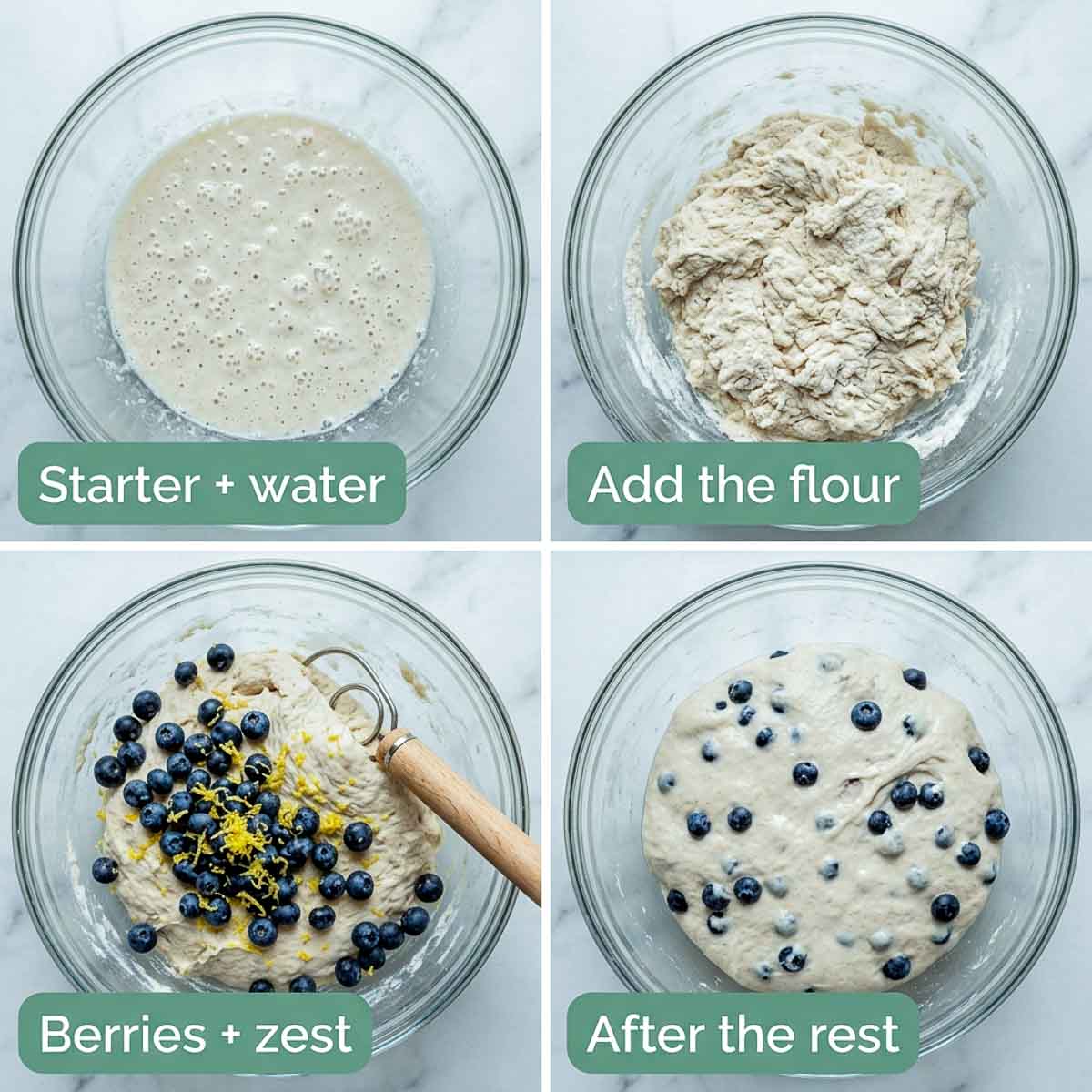
- Mix the starter and water. Whisk the active starter into the water in a large bowl until fully dispersed and cloudy.
- Add the flour. Mix in the bread flour until no dry patches remain. Rest 30 minutes.
- Add the berries and zest. Add the salt, blueberries, and lemon zest, then fold through as evenly as you can.
- Rest. Another 30 minutes. Not all the berries incorporate on this first pass, and that is expected.
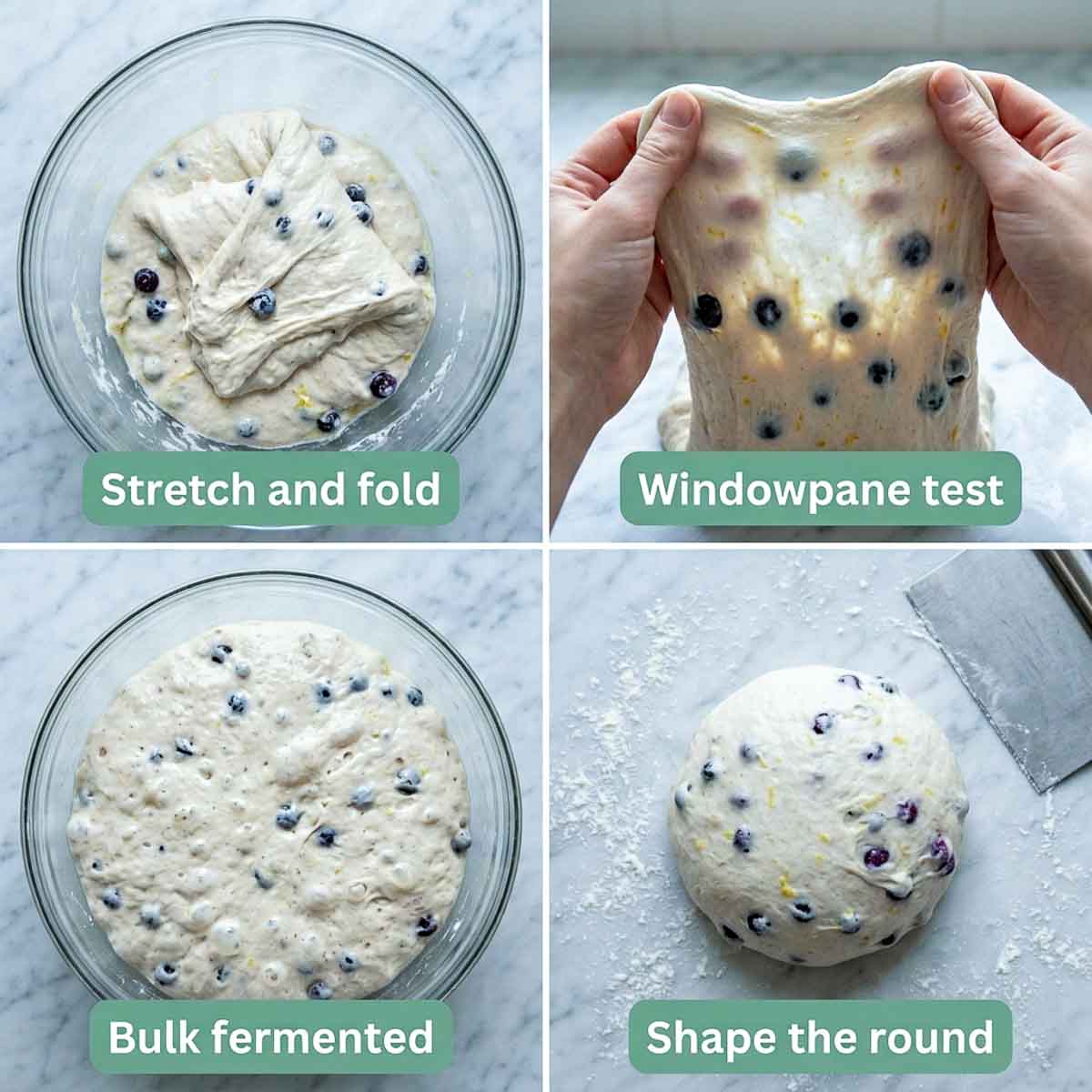
- Stretch and fold. Six sets, 30 minutes apart. With wet hands, lift one edge, stretch it up without tearing, and fold it over the center. Turn the bowl a quarter and repeat all the way around.
- Check the windowpane. Stretch a piece thin enough to pass light. A small tear where a berry sits is normal.
- Bulk ferment. Until close to doubled with bubbles across the top, roughly 3 to 4 hours depending on your kitchen. Go by the dough, not the clock.
- Shape the round. Turn onto a lightly floured surface, fold both sides to the center, and tuck into a taut round.
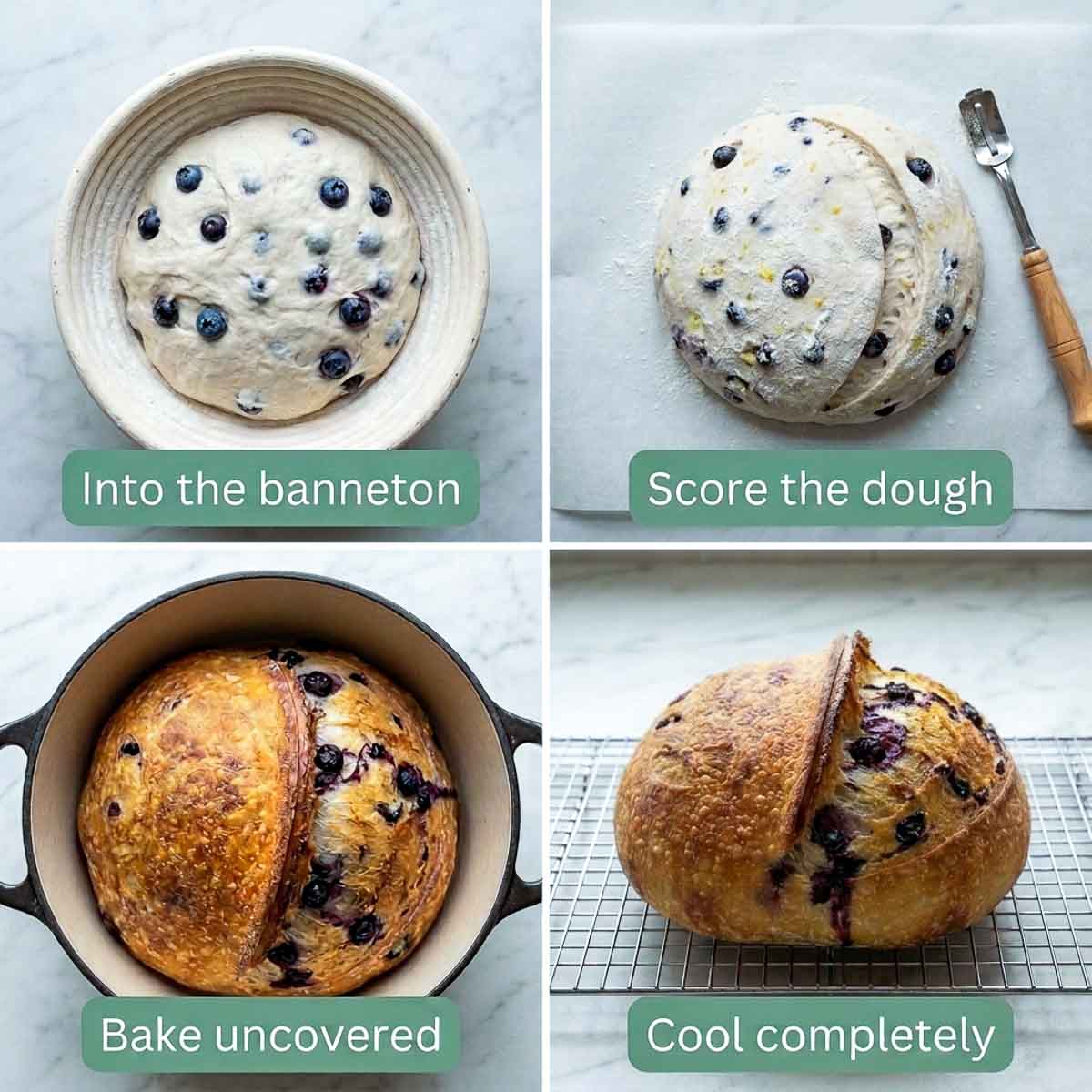
- Into the banneton. Seam side up in a banneton dusted with rice flour. Cover loosely and refrigerate overnight.
- Score the dough. Preheat the Dutch oven at 450°F for 45 minutes. Turn the cold dough onto parchment and score once with a confident curved slash.
- Bake. Covered for 20 minutes, then uncovered for 15 more until deeply golden. Turn the oven off, crack the door, and leave the loaf inside for 15 minutes.
- Cool completely. Cutting a sweet sourdough bread while warm gives you a gummy crumb, and the fruit needs time to set.
Recipe Testing Notes
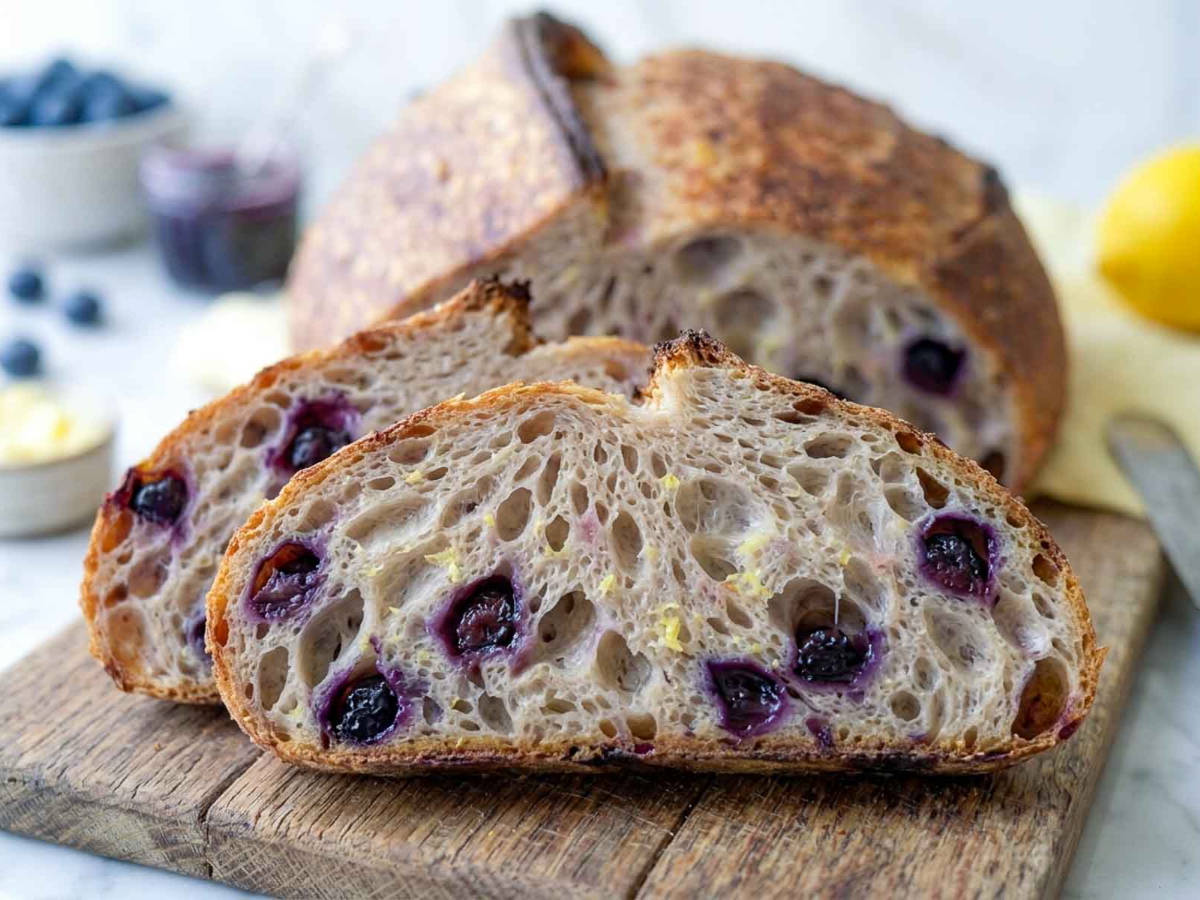
- The berries pop out, and I stopped fighting it. Not all of them go in on the first mix. They work their way in over the six sets of folds, and if one surfaces, I just tuck it back under.
- The windowpane may tear where a blueberry sits. The berry creates a pressure point, especially if it is ripe or already releasing juice. That small local tear is normal, and I do not stretch harder to force a perfect membrane.
- I work around the fruit, not through it. I grip a berry-free edge of dough, stretch it gently, and fold it over the blueberries, tucking exposed berries back in rather than pulling directly through them.
- There is no single fold where the berries pass in. The blueberries and zest go in before the first of six sets. Some are still exposed after the first set, and they become progressively enclosed over the folds that follow.
- This is a 365-gram formula, not the usual 500. It bakes a slightly smaller round than most sourdough recipes you will have seen, which suits a Dutch oven better and gives you a blueberry lemon sourdough loaf that gets eaten before it stales. Do not scale the water, salt, or berries up. The ratios are balanced for this size.
- Frozen blueberries work. They release more moisture, so the dough gets stickier and harder to handle, but the baked loaf is just as good.
- I do not publish cup measurements for sourdough. Scaling by volume is where most beginner loaves go wrong.
Substitutions and Variations
- All-purpose or whole wheat flour. A blend works, though the crumb tightens. Untested at full substitution.
- Lemon juice instead of zest. A weaker swap. The oils in the zest carry the flavor, while juice mostly adds moisture.
- Skip the lemon. The plain blueberry version works on its own.
- A glaze. This blueberry lemon sourdough bread is not glazed. There is no sugar in the dough, so a glaze pushes it into dessert territory and softens the crust. For the properly sweet version of these flavors, bake a lemon blueberry bundt cake instead.
- Same-day version. Possible by warming the bulk ferment and skipping the overnight rise, but the flavor is noticeably flatter. If the sweet version has you wanting a plain loaf for butter and soup, this same-day sourdough bread uses the same four ingredients and finishes in a single afternoon.
Blueberry Lemon Cream Cheese Sourdough
The most requested variation on this loaf, and the reason it works is the timing. Cream cheese goes in cold and late, not mixed through with the berries.
Chill an 8 oz block, cut it into half-inch cubes, and keep them in the fridge until the moment they go in. After the final stretch and fold, stretch the dough into a rough rectangle on a damp counter, scatter the cubes over two-thirds of it, then fold in thirds like a letter and rest before shaping. Adding it earlier, during the folds, smears it through the crumb and turns the loaf dense.
The cream cheese held its shape surprisingly well, with distinct creamy pockets throughout the crumb rather than smearing into the dough. I baked the loaf a little longer than the blueberry-only version to make sure the center was fully set, and I would keep the cream cheese cold right up until the moment it goes into the dough next time.
Pin It For Later
Lemon Blueberry Sourdough Bread FAQs
Yes. They release more water, so expect a stickier dough that is trickier to shape. Fold them in frozen rather than thawing, and accept more purple streaking through the crumb.
No, and I would not. This is a bread rather than a cake, and a glaze fights the crust. Serve it with something sweet on the side instead.
Not this recipe. Discard has no leavening power, so it needs a completely different formula built around baking soda or baking powder. This one relies entirely on an active starter.
You can, but the flavor is noticeably weaker. Zest holds the aromatic oils; juice mostly adds acid and water.
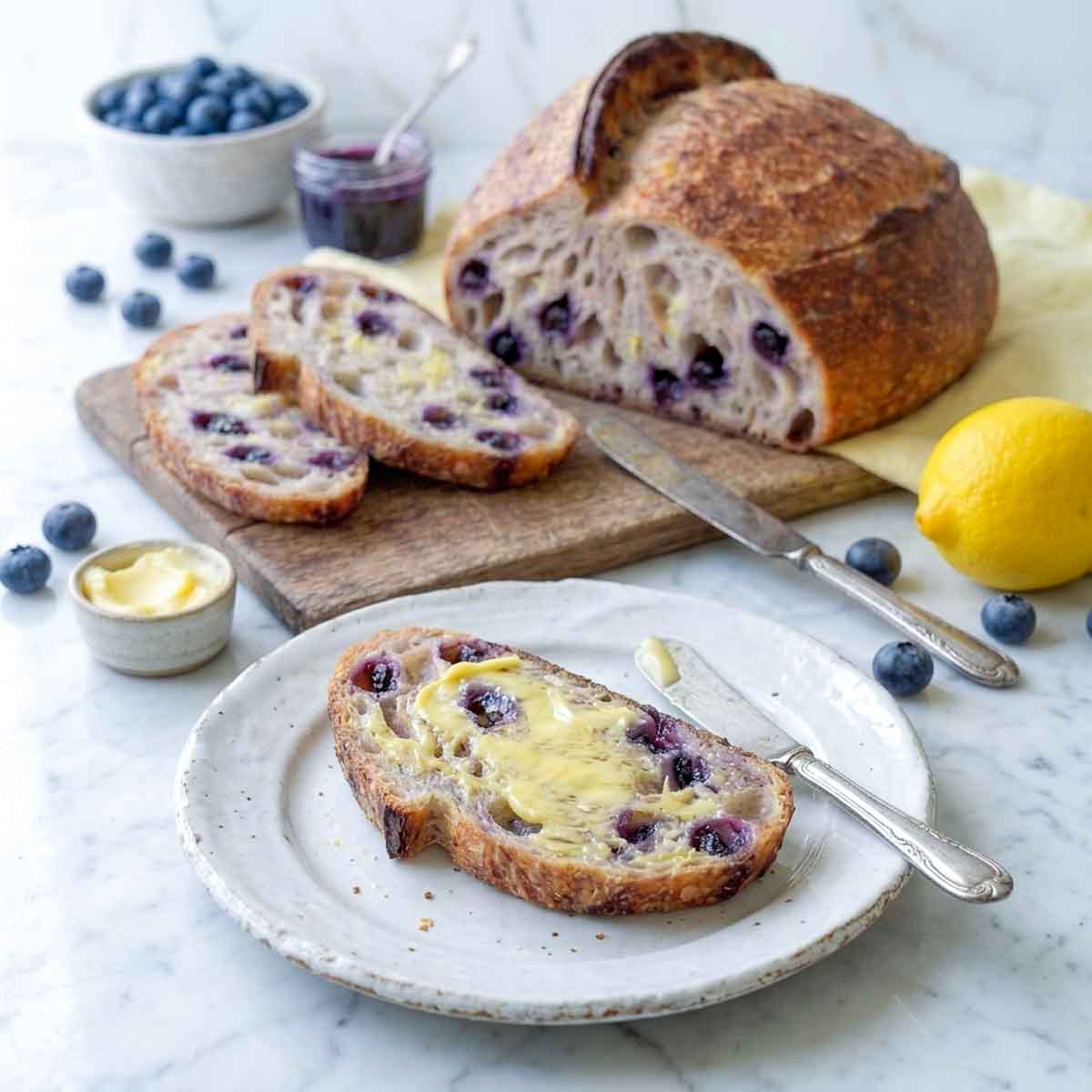
Toasted with salted butter is the whole point. Beyond that, blueberry jam, a soft cheese, or cut thick for French toast the day it starts to go stale. For everyday sandwiches and lunchboxes, my sourdough sandwich bread is the loaf to keep alongside this one.
Cut side down on a board at room temperature for two days, or in a paper bag. Plastic softens the crust. It will not last well past day three uncut.
Yes. Cool completely, then freeze whole or pre-sliced in a sealed bag for up to three months. Slices toast straight from frozen, which is the most useful way to keep it.
Usually an underactive starter or an underdone bulk ferment. The fruit adds weight and moisture, so this dough needs to be genuinely close to doubled before shaping. If the starter is the problem, feeding and maintaining a sourdough starter covers the schedule that fixes it, and mistakes beginners make with sourdough cover the rest.
Yes. You will see this loaf written both ways, and the order of the fruit and citrus in the name makes no difference to the recipe. Some bakers call it a blueberry lemon sourdough loaf; others lead with the lemon. Same dough, same method, same result.
Yes. A blueberry lemon cream cheese sourdough is the most common variation people ask about, and the method is above. The short version: cold cubes, laminated in after the last fold, never mixed through with the berries.
If you bake this one, please don't forget to give a 5-star rating and tell me how the crumb turned out. I read every comment.
Ingredients
- 100 g active sourdough starter
- 365 g bread flour
- 240 g filtered water
- 10 g salt
- 125 g fresh blueberries
- 2 lemons zested
- Rice flour for dusting the banneton
Instructions
- Whisk the active starter into the water in a large bowl until fully dispersed.
- Mix in the bread flour until no dry flour remains. Rest 30 minutes.
- Add the salt, blueberries, and lemon zest. Fold through as evenly as possible.
- Rest 30 minutes.
- Perform six sets of stretch and folds at 30 minute intervals, tucking surfaced berries back in.
- Check the windowpane. A small tear where a berry sits is expected.
- Bulk ferment until nearly doubled with bubbles across the surface, about 3 to 4 hours.
- Turn onto a lightly floured surface, fold both sides to the center, and tuck into a taut round.
- Place seam side up in a banneton dusted with rice flour. Cover and refrigerate overnight.
- Preheat a covered Dutch oven at 450°F for 45 minutes. Turn the dough onto parchment and score once.
- Bake covered 20 minutes, then uncovered 15 minutes until deeply golden. Turn off the oven, crack the door, and leave the loaf inside 15 minutes.
- Cool completely on a rack before slicing.
Notes
- Feed your starter 1:1:1 the night before so it is at peak when you mix.
- Not all berries incorporate on the first fold. They work in over the six sets.
- A small windowpane tear where a berry sits is normal. Do not stretch harder to force a perfect membrane.
- Frozen blueberries work but make the dough stickier and harder to shape.
- This recipe is written by weight. Volume measures are not reliable for sourdough.
- This is a 365 g formula and bakes a slightly smaller round than most sourdough recipes. Keep the ratios as written rather than scaling up to 500 g.